


Why Your Metabolism Slows Down After 50 — And 5 Things That Actually Help
This content is for informational and educational purposes only. It does not constitute medical advice. Please consult your healthcare provider before making changes to your diet, supplements, or health routine.
If you’ve been searching for answers about why your metabolism slows down after 50 reasons, know this: what you’re experiencing is real, it’s documented, and — most importantly — it’s not irreversible. Research published by the National Institutes of Health confirms that metabolic rate declines meaningfully with age, with the most pronounced changes occurring after 50. But the reasons are more specific than most people realize, and that specificity is actually good news — because targeted problems have targeted solutions.
You’re probably eating roughly the same way you did at 35. Maybe even less. And yet the weight creeps up, energy dips in the afternoon, and nothing seems to work the way it used to. This is one of the most frustrating health experiences a person can have — and it deserves a real explanation, not a dismissive “just eat less and move more.”
In this article, you’ll learn exactly why metabolism changes after 50 — the biology behind it, broken down clearly — and five evidence-based strategies that have real research behind them. No fad diets. No supplements promising miracles. Just honest, useful information so you can make better decisions for your health.
What “Metabolism” Actually Means — And Why It Matters After 50
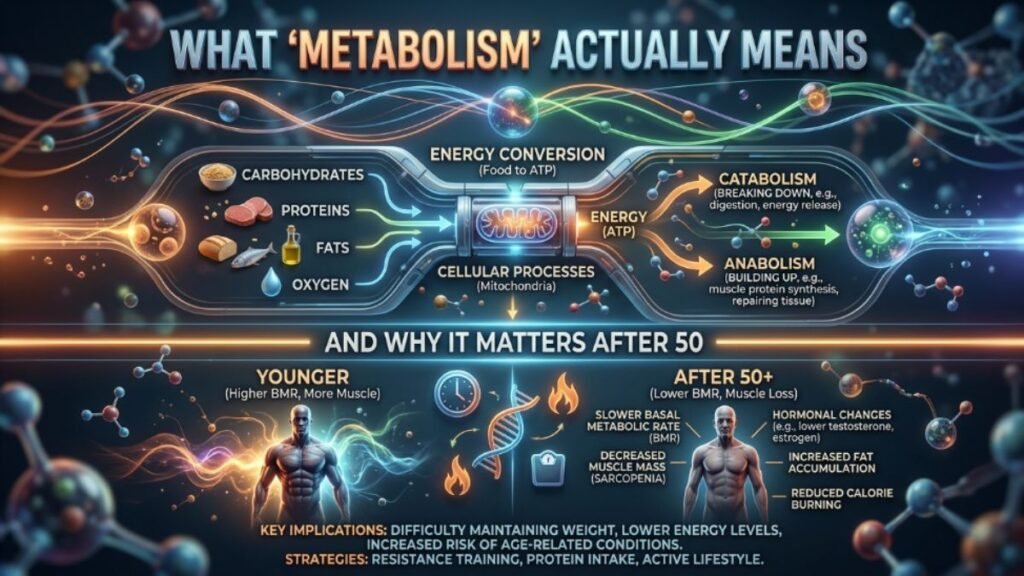
Before diving into why it slows, it helps to understand what metabolism actually is — because the word gets used loosely in ways that muddy the conversation.
Your metabolism is the sum of all chemical processes your body uses to convert food and stored energy into fuel. The number most people refer to is Basal Metabolic Rate (BMR) — the calories your body burns at rest just to keep you alive: heart beating, lungs breathing, cells repairing, temperature regulating.
BMR accounts for roughly 60–70% of your total daily calorie burn. Physical activity accounts for about 20–30%. The remaining 10% is the thermic effect of food — the energy required to digest and process what you eat.
After 50, all three components are under pressure. But the BMR change is where most of the story lives.
How Much Does Metabolism Actually Slow With Age?
This is where the science gets interesting — and more nuanced than the old “your metabolism drops 2% per decade” rule of thumb.
A landmark 2021 study published in Science — one of the most comprehensive metabolic analyses ever conducted, covering 6,400 participants from ages 8 to 95 — found that metabolism is remarkably stable between ages 20 and 60. The more dramatic decline happens after 60. However, other research consistently shows that the body composition changes that accelerate after 50 (particularly muscle loss) produce meaningful functional metabolic shifts well before the BMR numbers change dramatically.
In other words: your BMR may not crater overnight at 50, but what happens to your body composition in your late 40s and 50s sets up significant metabolic disadvantage if left unaddressed.
The Real Reasons Your Metabolism Slows After 50
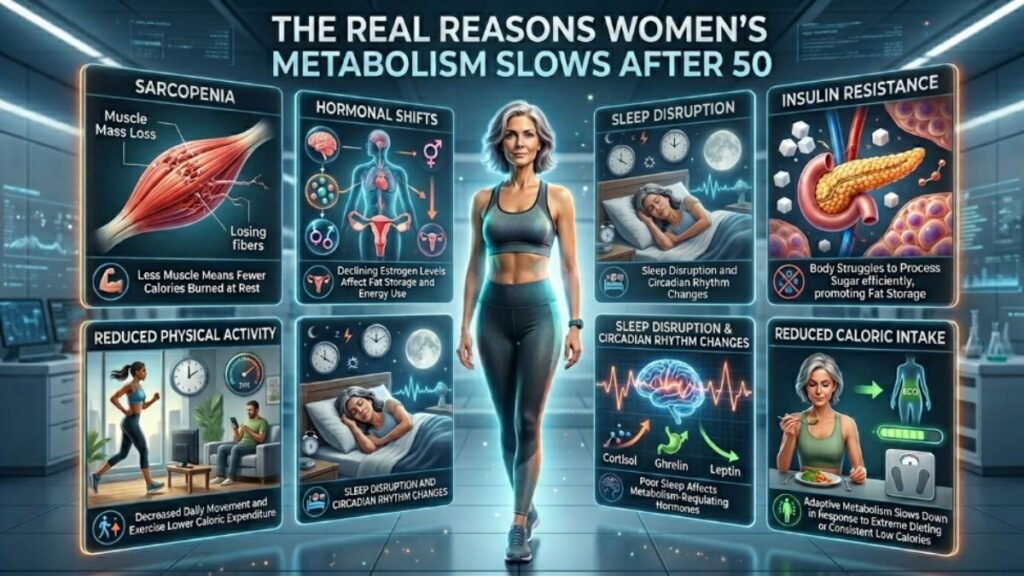
1. Sarcopenia — The Muscle Loss You Don’t Feel Until It’s Significant
Muscle is metabolically expensive tissue. At rest, one pound of muscle burns approximately 6 calories per day — compared to roughly 2 calories for a pound of fat. That difference sounds small, but across a whole body, it adds up substantially.
Starting around age 30, adults lose roughly 3–8% of muscle mass per decade. After 60, that rate accelerates. By 50, if you haven’t been actively working to preserve it, you may have lost 10–15% of your peak muscle mass — and with it, a corresponding portion of your resting metabolic capacity.
This is called sarcopenia, and it’s the single most influential driver of age-related metabolic slowdown. It also compounds: less muscle means fewer calories burned at rest, which means easier fat gain, which means higher body fat percentage, which means even less metabolically active tissue.
The good news: sarcopenia is highly responsive to resistance training at any age, including after 60 and 70. This is one of the most well-supported findings in exercise science.
2. Hormonal Shifts — Estrogen, Testosterone, and Thyroid Function
Hormones are metabolic regulators. After 50, several key hormones shift in ways that directly affect how your body processes energy and stores fat.
In women:
- Estrogen declines sharply during perimenopause and menopause. Estrogen plays a role in insulin sensitivity, fat distribution, and appetite regulation. Its decline contributes to increased abdominal fat accumulation and shifts in where the body stores energy.
- Progesterone also declines, which can disrupt sleep quality — and poor sleep independently impairs metabolic function (more on this below).
In men:
- Testosterone declines gradually from around age 30, with more noticeable effects after 50. Testosterone supports muscle mass maintenance and fat metabolism. Lower levels are associated with reduced lean mass and increased visceral fat.
In both sexes:
- Thyroid function can become less efficient with age. The thyroid gland produces hormones (T3 and T4) that directly regulate metabolic rate. Subclinical hypothyroidism — thyroid function that is low but not low enough to trigger a clinical diagnosis — becomes more common after 50 and can produce symptoms that closely mimic “normal aging”: fatigue, weight gain, cold intolerance, and mental fog.
⚠️ Important: If you’re experiencing significant unexplained weight gain, persistent fatigue, or other metabolic symptoms after 50, ask your doctor to run a full thyroid panel (TSH, Free T3, Free T4). Subclinical thyroid issues are frequently missed and are treatable.
3. Insulin Resistance — The Silent Metabolic Disruptor
Insulin is the hormone responsible for moving glucose from your bloodstream into your cells, where it can be used for energy. Insulin sensitivity — how effectively your cells respond to that signal — tends to decline with age, inactivity, and increasing body fat percentage.
When cells become resistant to insulin, the pancreas compensates by producing more of it. Chronically elevated insulin levels signal the body to store rather than burn fat, particularly around the abdomen. This visceral fat, in turn, produces inflammatory compounds that further impair insulin signaling — a cycle that compounds over time.
Research published in Diabetes Care has established that insulin resistance increases significantly after 50, and that this shift accelerates fat accumulation independent of caloric intake. This explains why two people eating identically can have very different metabolic outcomes depending on their insulin sensitivity.
4. Reduced Physical Activity — Often Subtle, Always Consequential
After 50, many people reduce activity levels gradually without fully registering the shift. Work schedules change, joint discomfort discourages movement, recovery from exercise takes longer. The cumulative effect on NEAT (Non-Exercise Activity Thermogenesis) — the calories burned through everyday movement like walking, standing, and fidgeting — can be substantial.
NEAT accounts for anywhere from 100 to 800+ calories per day depending on lifestyle. Even small reductions in habitual movement, accumulated over years, translate into significant metabolic differences.
This is not about guilt. It’s about understanding that your metabolism is responsive to movement signals in ways that go far beyond formal exercise sessions.
5. Sleep Disruption and Circadian Rhythm Changes
Sleep architecture changes meaningfully after 50. Deep sleep (slow-wave sleep) decreases, sleep becomes more fragmented, and circadian rhythms shift. These aren’t just inconveniences — they have direct metabolic consequences.
During deep sleep, the body performs metabolic maintenance: regulating cortisol, releasing growth hormone (which supports muscle repair and fat metabolism), and resetting insulin sensitivity. Chronically disrupted sleep elevates cortisol levels, increases appetite hormones (ghrelin), decreases satiety hormones (leptin), and promotes visceral fat storage.
A study from the University of Chicago found that sleep restriction reduced the proportion of weight lost as fat by 55% in participants on a calorie-restricted diet — while increasing loss of lean muscle mass. In metabolic terms, poor sleep is extraordinarily costly.
Many of the same hormonal and lifestyle factors that slow metabolism are also behind the chronic fatigue many women experience at this age — if that resonates, see our complete guide on Why Am I Always Tired at 40? Causes, Solutions, and What Actually Helps.
6. Reduced Caloric Intake — The Paradox That Backfires
There’s an irony that traps many people after 50: the attempt to eat less to compensate for perceived metabolic slowdown can actually make the problem worse.
When caloric intake drops significantly, the body responds by downregulating metabolism to match the reduced fuel supply. This is sometimes called adaptive thermogenesis — the body’s survival mechanism against perceived famine. The result is that very low-calorie diets, especially without adequate protein and resistance training, accelerate muscle loss and lower BMR further. Weight loss stalls, and the moment calories increase even modestly, fat returns rapidly.
This doesn’t mean calorie awareness is irrelevant. It means that severe restriction without strategic support for muscle mass is counterproductive for the 50+ body.
5 Things That Actually Help — Based on Evidence

1. Prioritize Protein at Every Meal
Protein is the single most metabolically valuable macronutrient for adults over 50. It supports muscle preservation, has the highest thermic effect of any macronutrient (20–30% of protein calories are burned during digestion), and improves satiety.
Current research suggests that adults over 50 need significantly more protein than younger adults — not less, as was once commonly believed. The Recommended Dietary Allowance (RDA) of 0.8g per kilogram of body weight is now considered inadequate for older adults by most metabolic health researchers.
What the evidence suggests:
- Aim for 1.2–1.6g of protein per kilogram of body weight daily for metabolic and muscle preservation purposes
- Distribute protein evenly across meals (25–40g per meal) rather than concentrating it in one sitting — research suggests muscle protein synthesis is maximized by distributed intake
- Prioritize complete proteins: eggs, lean poultry, fish, Greek yogurt, legumes combined with grains
💡 Practical note: If you weigh 150 lbs (68 kg), a target of 1.4g/kg puts your daily protein goal at approximately 95g — significantly more than the average American woman over 50 currently consumes.
2. Resistance Training — The Non-Negotiable
No supplement, diet approach, or lifestyle modification rivals resistance training for metabolic preservation after 50. The evidence is unambiguous and spans decades of research.
Resistance training directly combats sarcopenia, increases BMR by rebuilding metabolically active muscle, improves insulin sensitivity, supports bone density, and has favorable effects on hormonal balance — including growth hormone and testosterone in both sexes.
What the research supports:
- A minimum of 2–3 sessions per week of resistance training targeting major muscle groups
- Progressive overload — gradually increasing challenge — is necessary for continued adaptation
- Compound movements (squats, deadlifts, rows, presses) produce greater hormonal and metabolic response than isolation exercises
- Benefits are dose-dependent but not age-limited: studies show meaningful muscle gain in adults in their 60s, 70s, and even 80s
A 2019 meta-analysis in the British Journal of Sports Medicine found that resistance training in older adults reduced body fat percentage, increased lean mass, and improved metabolic markers — regardless of starting age.
3. Optimize Sleep Quality — Treat It as Metabolic Medicine
Given the direct relationship between sleep disruption and metabolic dysfunction after 50, improving sleep quality is a legitimate metabolic intervention — not a lifestyle luxury.
Evidence-based sleep strategies for 50+:
- Consistent sleep and wake times — even on weekends. Circadian consistency has measurable effects on cortisol regulation and metabolic hormone cycles.
- Limit alcohol consumption, particularly in the evening. Alcohol suppresses REM and deep sleep significantly, even in small amounts.
- Cool sleep environment — core body temperature must drop to initiate and maintain deep sleep. A room temperature of 65–68°F (18–20°C) is consistently associated with better sleep quality.
- Limit blue light exposure 1–2 hours before bed — screens suppress melatonin production, which already declines with age.
- Evaluate sleep apnea risk — prevalence increases sharply after 50, and untreated sleep apnea is a significant driver of metabolic disruption, insulin resistance, and weight gain. Symptoms include loud snoring, waking unrefreshed, and daytime fatigue.
4. Address Insulin Sensitivity Through Food Timing and Composition
You don’t need to follow a strict diet to meaningfully improve insulin sensitivity. Specific, sustainable changes to what you eat and when can have significant effects.
What the evidence supports:
- Reduce refined carbohydrates and added sugars — these produce rapid glucose spikes that stress insulin response. Replacing refined grains with whole grains, legumes, and vegetables substantially reduces glycemic load.
- Increase dietary fiber — soluble fiber (oats, beans, flaxseed, vegetables) slows glucose absorption and feeds gut bacteria that produce compounds improving insulin sensitivity. A target of 25–38g per day is supported by multiple guidelines.
- Consider time-restricted eating — limiting your eating window to 8–10 hours (e.g., 9am–7pm) without strict caloric restriction has shown benefits for insulin sensitivity and visceral fat reduction in several studies. This is not the same as aggressive fasting and is generally well-tolerated.
- Vinegar with meals — 1–2 tablespoons of apple cider vinegar diluted in water before a carbohydrate-rich meal has been shown in small but replicated studies to blunt post-meal glucose spikes by 20–35%.
⚠️ Note: If you are diabetic, pre-diabetic, or taking medications that affect blood sugar (including metformin, SGLT2 inhibitors, or insulin), speak with your physician before making significant dietary changes. Food timing and composition can affect medication requirements meaningfully.
5. Increase NEAT — The Underestimated Metabolic Lever
Formal exercise is important, but for most people over 50, the bigger metabolic opportunity lies in non-exercise movement throughout the day.
NEAT — the calories burned through every activity that isn’t deliberate exercise — is highly variable and highly controllable. Standing instead of sitting burns roughly 50 more calories per hour. Walking 7,000–8,000 steps per day versus 3,000 can represent a 200–400 calorie daily difference.
Practical NEAT strategies:
- Walk after meals — even 10 minutes improves post-meal glucose metabolism
- Use a standing desk or take standing breaks every 45–60 minutes
- Take stairs consistently
- Park farther, walk more errands, pace during phone calls
- Set a movement alarm if you tend to sit for long stretches
The cumulative effect of these small, unglamorous habits is not small. Over a month, the difference between a sedentary and a moderately active day — outside of any formal exercise — can represent thousands of calories and meaningfully better metabolic markers.
Bringing It Together: A Realistic Picture
Here’s what the evidence actually looks like, combined:
| Strategy | Primary Mechanism | Timeframe to Notice Effect |
|---|---|---|
| High-protein diet | Muscle preservation, thermic effect | 4–8 weeks |
| Resistance training (2–3x/week) | Rebuild lean mass, improve BMR | 8–12 weeks |
| Sleep optimization | Cortisol, insulin sensitivity, hormones | 2–4 weeks |
| Dietary quality / insulin sensitivity | Glucose regulation, fat storage | 4–8 weeks |
| Increased NEAT | Direct calorie expenditure | Immediate |
None of these are quick fixes. But all five are backed by consistent, peer-reviewed evidence — and none require extreme restriction, expensive programs, or unrealistic lifestyle changes.
If you want to go deeper on practical day-to-day habits, our guide on How to Boost Metabolism After 40: The Complete Guide to Reigniting Your Body’s Engine covers the full strategy with specific protocols for every decade after 35.
When to Talk to Your Doctor
Not all metabolic slowdown after 50 is simply “aging.” Some causes are medically treatable and should not be attributed to lifestyle alone.
See your doctor if you experience:
- Significant unexplained weight gain over a short period (weeks, not months)
- Persistent extreme fatigue not resolved by rest
- Intolerance to cold, constipation, hair thinning, or slowed thinking (possible thyroid involvement)
- Excessive thirst, frequent urination, or blurred vision (possible blood sugar issues)
- Symptoms of sleep apnea (loud snoring, gasping, waking unrefreshed)
A basic metabolic panel, thyroid panel, and fasting glucose/insulin test can identify actionable issues that lifestyle changes alone won’t resolve.
Conclusion
The metabolism slowdown after 50 is real — but it is not a sentence. It is a signal. Your body is telling you that the strategies that worked at 35 need to be upgraded, not abandoned.
The five strategies in this article — protecting and rebuilding muscle through protein and resistance training, treating sleep as a metabolic intervention, improving insulin sensitivity through smarter food choices, and increasing everyday movement — address the actual biological mechanisms driving the slowdown.
Start with one. Build from there. The 50+ body is more adaptable than the fitness industry would have you believe — and the research is firmly on your side.
Frequently Asked Questions about Why Your Metabolism Slows Down After 50
Is it possible to actually speed up your metabolism after 50?
Yes — with important nuance. You likely cannot restore your metabolism to what it was at 25, but you can substantially improve it relative to where it is now. Resistance training, adequate protein intake, improved sleep, and increased daily movement have all been shown to raise resting metabolic rate in adults over 50. The key is consistency over months, not weeks.
Can supplements boost metabolism after 50?
Some supplements have modest supporting evidence — green tea extract, creatine (for muscle preservation), and magnesium (for insulin sensitivity and sleep) are among the better-studied. However, no supplement replaces the metabolic impact of muscle-building exercise and adequate protein. Supplements should support a solid lifestyle foundation, not substitute for it.
How much protein do I actually need after 50?
Most current metabolic research suggests adults over 50 need 1.2–1.6 grams of protein per kilogram of body weight daily — significantly above the standard RDA of 0.8g/kg. For a 150-pound (68 kg) adult, that translates to roughly 82–109 grams per day, spread across meals.
Does menopause permanently damage metabolism?
No. Menopause accelerates certain metabolic changes — particularly around abdominal fat distribution and insulin sensitivity — due to estrogen decline, but these effects are manageable and partly reversible. Resistance training, dietary protein, and sleep quality are especially important during and after the menopausal transition.
How long before I see metabolic results from lifestyle changes?
Sleep improvements can produce measurable effects within 2–4 weeks. Dietary changes affecting blood sugar typically show results in 4–8 weeks. Resistance training produces noticeable muscle and metabolic changes over 8–12 weeks of consistent effort. Sustainable metabolic improvement is a 3–6 month project, not a 2-week one.
Can stress affect metabolism after 50?
Significantly. Chronic stress elevates cortisol, which promotes fat storage (particularly visceral fat), degrades muscle tissue, impairs sleep, and disrupts insulin signaling. Stress management — through whatever sustainable practices work for you — is a legitimate metabolic health strategy, not merely a wellness nicety.
Should I eat less to lose weight after 50?
Not necessarily. Aggressive caloric restriction without adequate protein and resistance training accelerates muscle loss, lowers BMR, and triggers adaptive thermogenesis — making long-term fat loss harder. A modest caloric deficit (300–500 calories below maintenance) paired with high protein and resistance training produces better metabolic outcomes than severe restriction alone.

Sarah Mitchell is a health and wellness writer specializing in longevity, natural supplementation, and healthy aging for adults over 40. With a background in nutrition sciences and years of research into evidence-based approaches to long-term well-being, she founded Sowing Healthy to provide honest, research-grounded guidance for people navigating the health changes that come with midlife. Sarah believes that good health is built gradually — through the right information, consistent habits, and supplements that actually earn their place.