

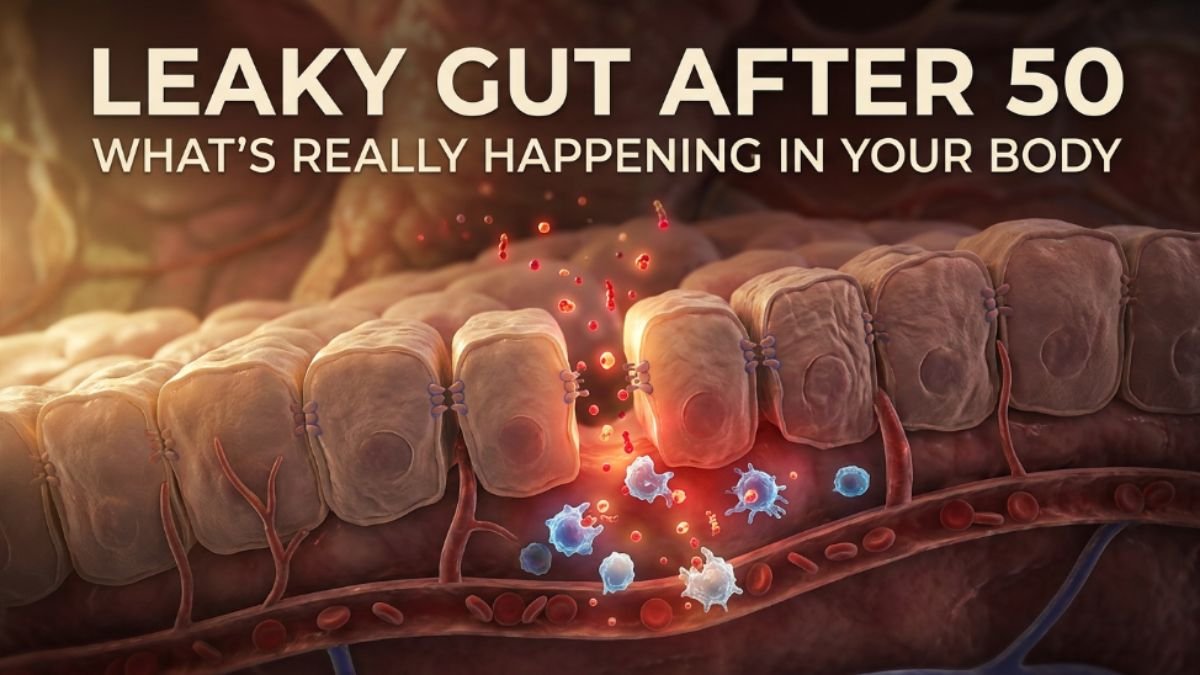
Leaky Gut After 50: What’s Really Happening in Your Body (And How to Support Your Gut Barrier)
If you’ve been reading about leaky gut after 50 and wondering whether it’s the missing piece behind your bloating, fatigue, or new food sensitivities, you’re asking a smart question — and you deserve an honest answer. Not a scary one, and not a sales pitch. Just the truth about what changes in your gut as you age, what the science actually supports, and what you can do about it starting this week.
Here’s something that surprises a lot of my readers: the gut lining renews itself every few days. It’s one of the fastest-regenerating tissues in your entire body. That means the barrier protecting you isn’t a fixed structure you’re stuck with — it’s something your body rebuilds constantly, and something you can support with the right inputs.
Let’s walk through it together, gently and clearly, so that by the end you feel less anxious and more in control.
First, Let’s Be Honest About What “Leaky Gut” Actually Means
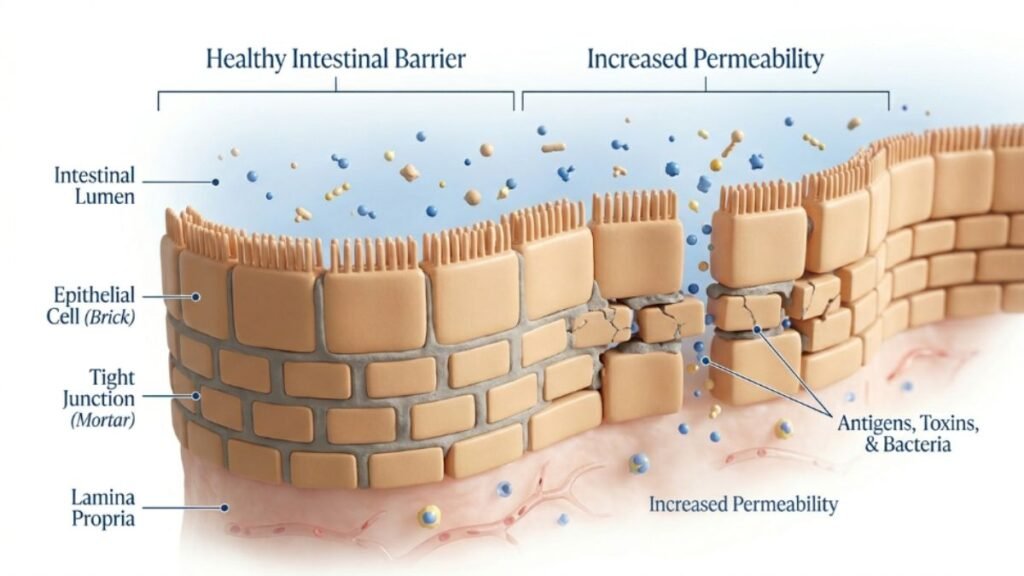
You’ll see “leaky gut syndrome” thrown around as if it were a formal diagnosis. It isn’t — and any source that tells you otherwise isn’t being straight with you.
What is real, well-studied, and measurable is increased intestinal permeability. Your gut lining is a single layer of cells held together by structures called tight junctions. Think of them as the mortar between bricks in a wall. These junctions are designed to be selective: they open just enough to let digested nutrients and water pass into your bloodstream, while keeping out larger particles like undigested food, toxins, and bacteria.
When those tight junctions loosen, the wall becomes more porous than it should be. Substances that were meant to stay inside your digestive tract can slip through. Your immune system notices, and it responds with inflammation. According to the Cleveland Clinic, while “leaky gut syndrome” isn’t a recognized medical diagnosis, increased intestinal permeability is a genuine phenomenon that researchers continue to study, often appearing alongside other digestive conditions rather than as a standalone illness.
So when we talk about leaky gut after 50, what we really mean is: is my intestinal barrier working as well as it used to, and how do I support it? That’s a question worth taking seriously — without panic.
Why the Gut Barrier Changes After 50
Your digestion at 55 is simply not running the same machinery it ran at 30. Several age-related shifts stack up, and understanding them takes away a lot of the mystery.
Hormonal changes around menopause
Estrogen does far more than regulate your cycle. It also helps maintain the gut lining and supports a diverse, balanced microbiome. As estrogen declines through perimenopause and menopause, many women notice their digestion becomes more reactive — more bloating, more sensitivity, more unpredictability. This isn’t your imagination, and it isn’t a personal failing. It’s biology.
A less diverse microbiome
The community of bacteria living in your gut tends to lose diversity with age. Those beneficial microbes do real work: they help reinforce tight junctions, calm inflammation, and produce compounds that feed the cells of your gut lining. When their numbers thin out, the barrier loses some of its natural support team.
Decades of small insults
By your 50s, your gut has weathered years of stressors that quietly chip away at the barrier: chronic stress, courses of antibiotics, regular use of NSAID pain relievers (like ibuprofen), acid-reducing medications, and the occasional glass of wine too many. None of these are catastrophic on their own. Together, over time, they add up.
Lower stomach acid and slower digestion
Stomach acid naturally declines with age, and digestion slows down. Food that isn’t fully broken down lingers longer and can irritate the gut lining, creating a cycle that feeds into both bloating and barrier stress.
The Signs People Notice (And Why They’re Easy to Miss)

Because increased intestinal permeability overlaps with so many other things, the signals are vague and easy to brush off. Readers in their 50s most often describe a cluster like this:
- Bloating or discomfort that’s become a near-daily background hum
- New or worsening food sensitivities to things you used to tolerate fine
- Fatigue that sleep doesn’t quite fix
- Occasional brain fog
- Skin flare-ups or general low-grade inflammation
- Achy joints without an obvious cause
Notice the word cluster. No single symptom here points to leaky gut after 50 on its own — fatigue alone could be a hundred things. It’s the pattern, especially when it appears alongside digestive changes, that makes gut barrier health worth a closer look. And it’s also exactly why you shouldn’t self-diagnose from a symptom list. More on when to see a professional shortly.
What the Science Says Actually Helps
Here’s the reassuring part. Because your gut lining rebuilds itself so quickly, supporting it is less about dramatic intervention and more about consistently giving it the right raw materials and removing the irritants. Let’s start with the foundations, because no supplement replaces these.
Feed the barrier with real food

Fiber-rich plants feed the beneficial bacteria that reinforce your gut lining. Fermented foods — yogurt with live cultures, kefir, sauerkraut, kimchi — add diversity back to an aging microbiome. Polyphenol-rich foods (berries, olive oil, green tea) help calm inflammation. This is the unglamorous foundation that does most of the heavy lifting.
Protect your sleep and manage stress
This isn’t a throwaway tip. Chronic stress directly weakens tight junctions through the gut-brain axis, and poor sleep disrupts the microbiome. For women navigating menopause, where sleep is often already fragile, this connection matters enormously.
Be thoughtful with gut irritants
If you reach for ibuprofen regularly, talk to your doctor about alternatives — NSAIDs are one of the better-documented contributors to barrier stress. The same goes for long-term acid-blocker use. Alcohol, too, is worth a candid look.
The targeted nutrients researchers keep returning to
When scientists study the intestinal barrier specifically, a short list of nutrients comes up again and again — and at the very top sits one amino acid.
L-Glutamine: The Most Studied Nutrient for the Gut Barrier

Of all the supplements marketed for gut health, L-glutamine has the strongest and most consistent research behind it for the barrier itself. Here’s why it matters so much.
L-glutamine is the primary fuel source for the cells lining your intestines (called enterocytes). These cells have an extremely fast turnover, and they’re hungry — they rely on glutamine to regenerate. During times of stress, illness, or simply the depletion that comes with age, your body’s glutamine can run lower than your gut would like.
The research is genuinely encouraging here. A 2024 systematic review and meta-analysis published in the journal Amino Acids found that glutamine supplementation promotes the expression of tight junction proteins — including occludin and claudins, the very structures that hold your gut wall together — and helps reduce intestinal permeability. In a separate randomized controlled trial, enteral glutamine reduced plasma zonulin (a key marker of intestinal permeability, sometimes called the “leaky gut” marker) by up to 40% over ten days compared with placebo.
That’s the kind of evidence that separates a genuinely supported nutrient from a hopeful trend.
Affiliate Disclosure: This article contains affiliate links. If you click through and make a purchase, Sowing Healthy may earn a small commission — at no extra cost to you. We only recommend products we have genuinely researched and believe may offer value to our readers. Our editorial opinions are always our own.
If you decide to try glutamine, how you choose it matters more than most people realize. The supplement aisle is full of proprietary blends that hide their doses, and gut products that lean on disease claims they can’t back up. For something you’re taking to support your gut lining, you want the opposite: total transparency.
What I look for is a single-ingredient formula with the dose printed plainly on the label, no proprietary blend, third-party testing to confirm what’s actually inside, and manufacturing in a facility that meets proper quality standards. The cleanest option I’ve come across is a single-ingredient L-glutamine powder that lists its full 5-gram dose with nothing else added, third-party tested and made in an FDA-registered facility — the kind of plain, honest formulation that lets you know exactly what you’re putting in your body. The powder form matters too: research on the gut barrier typically uses doses in the 5-gram range, which is far easier to reach with a scoop than by swallowing a fistful of capsules.
A reasonable, evidence-aligned starting point is around 5 grams of L-glutamine daily, mixed into water. As always, run it by your doctor first — especially if you have kidney concerns or take medications, since glutamine is processed by the kidneys.
What about collagen, zinc, and probiotics?
These get mentioned often, and they’re not without merit. Zinc-L-carnosine has supportive research for the gut mucosa, collagen provides amino acids that contribute to tissue repair, and probiotics help rebuild the microbial support team your barrier depends on. But if you’re going to start with one well-studied, transparent, single-ingredient option, glutamine is the most defensible place to begin. You can always layer in a quality probiotic chosen for women over 50 once your foundation is in place.
When Leaky Gut After 50 Deserves a Doctor’s Attention
This matters, so please don’t skip it. A symptom list online can never replace a proper evaluation, and some of the symptoms attributed to leaky gut overlap with conditions that genuinely need medical care.
Please see your healthcare provider if you experience: unexplained weight loss, blood in your stool, persistent or severe abdominal pain, ongoing diarrhea or constipation, difficulty swallowing, or symptoms that wake you at night. These warrant professional assessment rather than self-treatment — they can signal conditions like celiac disease, inflammatory bowel disease, or other issues that supplements simply aren’t designed to address. Supporting your gut barrier is a wonderful goal, but it’s a complement to good medical care, never a substitute for it.
You Have More Control Than You Think
If there’s one thing I hope you take from this, it’s this: your gut lining is not a lost cause, and “leaky gut after 50” is not a life sentence. The barrier rebuilds itself constantly, and the things that support it — fiber-rich food, fermented foods, better sleep, less reliance on gut irritants, and a well-chosen, transparent supplement like L-glutamine — are within your reach starting today.
Be patient with yourself. Pick one or two changes, give them a few honest weeks, and notice how you feel. Loop in your doctor for anything that feels off. Your body has been quietly rebuilding that gut wall this whole time. Now you know how to help it.
Frequently Asked Questions
Is leaky gut after 50 a real medical condition?
“Leaky gut syndrome” isn’t a formal medical diagnosis, but increased intestinal permeability — the underlying phenomenon — is real and measurable. After 50, hormonal shifts and a less diverse microbiome can make the gut barrier more reactive, which is why so many people notice digestive changes during this stage of life.
How long does it take to support the gut barrier?
Because the cells lining your gut renew every few days, some people notice changes within a few weeks of consistent diet and lifestyle adjustments. That said, results vary by individual, and lasting improvement comes from steady habits rather than quick fixes.
Is L-glutamine safe for women over 50?
For most healthy adults, L-glutamine is generally well tolerated at typical doses around 5 grams daily. However, because it’s processed by the kidneys, anyone with kidney concerns — or taking regular medications — should check with their doctor before starting.
Can menopause cause leaky gut?
Declining estrogen during menopause can affect both the gut lining and the diversity of your microbiome, which may contribute to increased intestinal permeability. This helps explain why digestive sensitivity often appears or worsens during this transition.
Do I need an expensive gut test first?
Not necessarily. Foundational steps — more fiber, fermented foods, better sleep, fewer gut irritants — benefit nearly everyone and carry little risk. If your symptoms are persistent or severe, though, see your doctor for proper testing rather than relying on direct-to-consumer kits.
What’s the difference between leaky gut and bloating?
Bloating is a symptom — a feeling of fullness or pressure — while increased intestinal permeability is a change in how your gut barrier functions. They can overlap, and bloating is sometimes part of the broader cluster people associate with gut barrier stress, but one doesn’t automatically mean the other.
Can I just eat my way to a healthier gut barrier?
For many people, diet and lifestyle do most of the work, and that’s where you should always start. Targeted supplements like L-glutamine are best thought of as support for a solid foundation — helpful additions, not replacements for good food, sleep, and stress management.

Sarah Mitchell is a health and wellness writer specializing in longevity, natural supplementation, and healthy aging for adults over 40. With a background in nutrition sciences and years of research into evidence-based approaches to long-term well-being, she founded Sowing Healthy to provide honest, research-grounded guidance for people navigating the health changes that come with midlife. Sarah believes that good health is built gradually — through the right information, consistent habits, and supplements that actually earn their place.