

Digestive Problems After 50: Natural Solutions That Actually Help
If you’re dealing with digestive problems after 50 — bloating that shows up out of nowhere, heartburn after meals you used to eat without a second thought, or a gut that just doesn’t feel as predictable as it once did — you are not imagining it, and you are far from alone. According to the National Institute on Aging, the digestive system goes through real, measurable changes as we age, and the decade after 50 is often when those changes start to make themselves felt at the dinner table.
Here’s the part most people don’t hear often enough: very few of these changes are permanent, and almost none of them require a lifetime of prescription medication to manage. Your body isn’t broken. It’s simply asking for a different kind of support than it needed at 35.
In this guide, we’ll walk through exactly what changes in your digestion after 50, what your most common symptoms are actually telling you, and the natural, evidence-based strategies that can help you feel comfortable in your own body again — without reaching for a prescription as the first and only answer.
This article on digestive problems after 50 is for informational and educational purposes only. It does not constitute medical advice. Please consult your healthcare provider before making changes to your diet, supplements, or health routine.
What Actually Changes in Your Digestion After 50
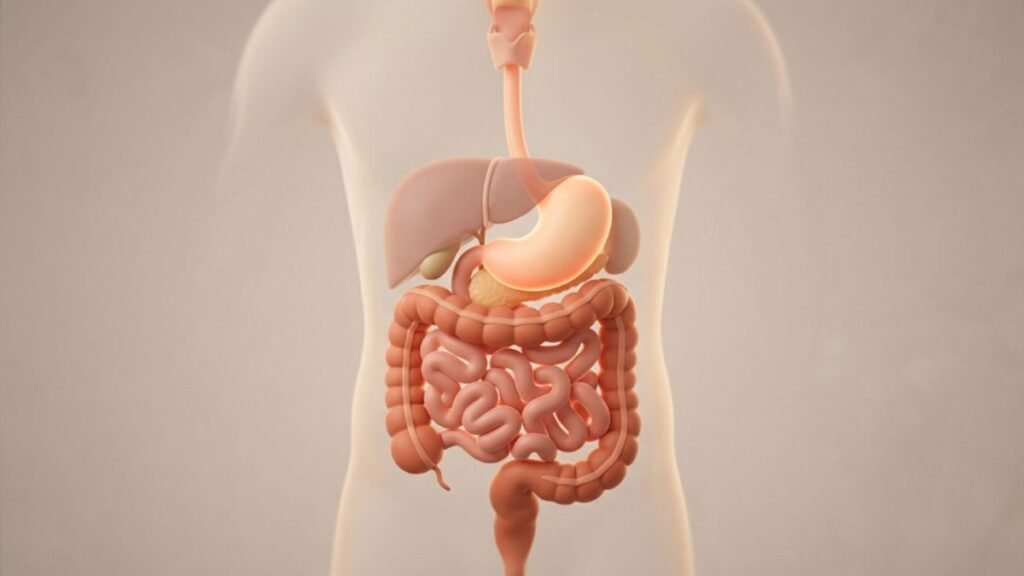
Digestion is a chain of events, and after 50, several links in that chain quietly weaken at the same time. Understanding which ones helps you choose the right solution instead of guessing.
Stomach Acid Tends to Decline
This is the one that surprises people most. We’re taught to think of digestive discomfort as too much acid — but after 50, low stomach acid (a condition called hypochlorhydria) becomes increasingly common. Stomach acid is what breaks down protein and helps you absorb key nutrients like vitamin B12, iron, calcium, and magnesium.
When acid is low, food sits longer than it should, which can paradoxically cause the same symptoms we blame on excess acid: bloating, reflux, and a heavy feeling after meals. This is why suppressing acid further isn’t always the fix it seems to be.
Digestive Enzyme Production Drops
Your pancreas and small intestine produce enzymes that break carbohydrates, fats, and proteins into pieces small enough to absorb. Enzyme output naturally tapers with age. The result is food that’s incompletely digested — which feeds gas-producing bacteria and leaves you feeling bloated, especially after richer or higher-fat meals.
The Gut Microbiome Shifts
The trillions of bacteria living in your gut change meaningfully with age. Research summarized by Harvard Health and others shows that microbial diversity tends to decline after midlife, and the balance can tip toward less beneficial species. Since these microbes influence everything from digestion to immune function to mood, a less diverse gut often means more bloating, more irregularity, and more sensitivity to foods you once tolerated easily.
Gut Motility Slows Down
The muscular contractions that move food through your intestines (peristalsis) tend to slow after 50. Add in lower physical activity, medications that affect the gut, and reduced fluid intake, and constipation becomes one of the most common digestive problems after 50 — affecting a significant share of older adults, according to the Cleveland Clinic.
The Most Common Digestive Problems After 50 — And What They’re Telling You

Your symptoms aren’t random. Each one points back to one or more of the changes above.
Bloating and Excess Gas
Often the first sign. Usually traces back to slower digestion, lower enzyme output, or a microbiome that’s fermenting food it can’t fully break down. Bloating that comes and goes with certain foods is very different from bloating that’s constant — the second deserves a closer look from your doctor.
Heartburn and Acid Reflux
Reflux after 50 is incredibly common, and it’s frequently misunderstood. While some people genuinely produce too much acid, many produce too little — and the real problem is a weakening of the valve between the stomach and esophagus, or food lingering too long. This distinction matters enormously when choosing a solution.
Constipation and Irregularity
Slower motility, less fiber, less water, and reduced movement combine into one of the most frustrating issues of this stage of life. The good news: constipation is also one of the most responsive to simple, natural changes.
New Food Sensitivities
Foods you ate for decades — dairy, certain grains, beans, raw vegetables — may suddenly cause trouble. This usually reflects declining enzyme activity (lactase, for example, drops with age) rather than a true allergy.
Leaky Gut and Increased Intestinal Permeability
An emerging area of research suggests the gut lining can become more permeable with age and chronic low-grade inflammation. While “leaky gut” is still a developing scientific concept and shouldn’t be over-claimed, the underlying idea — that the integrity of the gut barrier matters for whole-body health — is well supported.
Why Prescription Drugs Aren’t Always the First Answer
When you bring digestive complaints to a busy appointment, the fastest fix is often a prescription — most commonly a proton pump inhibitor (PPI) for reflux. These medications have a real and important place, and you should never stop a prescribed medication without talking to your doctor.
But it’s worth understanding the trade-off. PPIs work by shutting down stomach acid production. If your underlying issue is actually low acid or poor motility, suppressing acid may calm the symptom while the root cause continues. The Cleveland Clinic and other institutions also note that long-term PPI use has been associated with reduced absorption of nutrients like B12, magnesium, and calcium — the very nutrients many adults over 50 already struggle to absorb.
The point isn’t to avoid medication. It’s to recognize that for many people, addressing the root cause naturally — and reserving medication for when it’s genuinely needed — leads to better long-term comfort. That’s a conversation worth having with your provider, not a decision to make alone.
Wellness Tip: Before assuming you have too much acid, ask your doctor whether low acid could be the issue. A simple trick some practitioners suggest is paying attention to whether symptoms improve or worsen with protein-heavy meals — but always confirm with a professional before changing anything.
Natural Solutions for Digestive Problems After 50
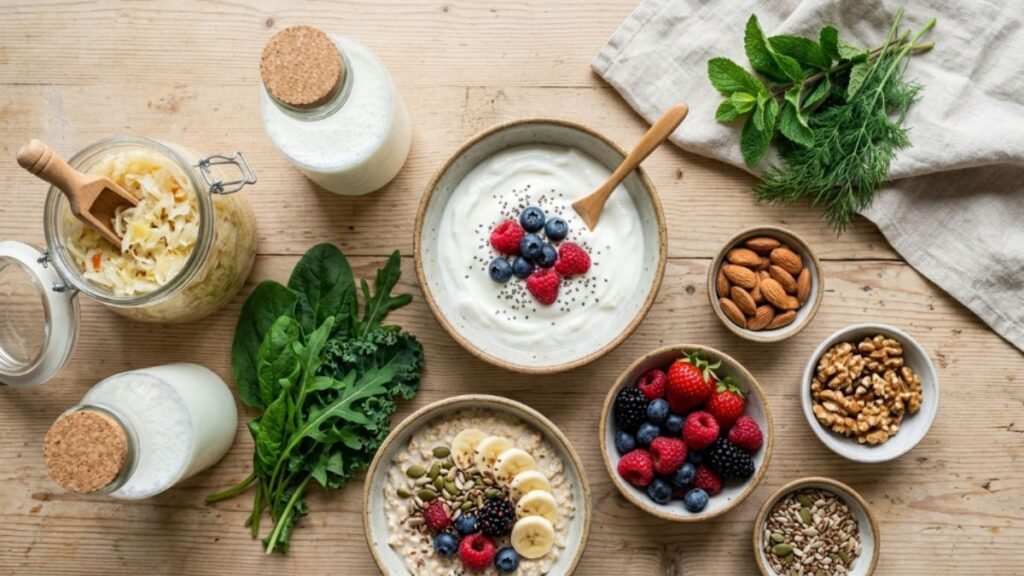
This is the heart of it. None of these are miracle cures, and results vary from person to person — but each is backed by a reasonable body of evidence and works with your changing body rather than against it.
Affiliate Disclosure: This article contains affiliate links. If you click through and make a purchase, Sowing Healthy may earn a small commission — at no extra cost to you. We only recommend products we have genuinely researched and believe may offer value to our readers. Our editorial opinions are always our own.
1. Eat for Your Changing Gut
Fiber is non-negotiable, but go slowly. Most adults over 50 fall short of the recommended 21–30 grams of fiber per day. Fiber feeds beneficial bacteria and keeps things moving. The catch: adding too much too fast causes more bloating, not less. Increase by about 5 grams per week and drink more water alongside it.
Add fermented foods. Yogurt with live cultures, kefir, sauerkraut, kimchi, and miso introduce beneficial microbes and the compounds that feed them. A few tablespoons daily is plenty to start.
Don’t fear protein — support it. Since acid and enzyme output decline, protein is harder to break down. Smaller, well-chewed portions are easier on your system than one large serving.
2. Support Stomach Acid Instead of Blindly Suppressing It
For people with confirmed low acid, gentle approaches like a splash of apple cider vinegar in water before meals, or bitter foods (arugula, dandelion greens) that stimulate digestive secretions, may help. This is exactly the kind of step to run by your healthcare provider first, especially if you take any acid-related medication.
3. Consider Digestive Enzymes
As enzyme production drops, a broad-spectrum digestive enzyme supplement taken with meals can help break down fats, proteins, and carbohydrates more completely — reducing the bloating that comes from undigested food. Look for a formula that includes lipase, protease, amylase, and lactase. We’ll go deeper on whether you actually need them in a dedicated guide.
4. Probiotics — What the Research Actually Supports
Probiotics are one of the most studied — and most over-hyped — tools for gut health. The honest summary: certain strains, at adequate doses (commonly in the range of 10–50 billion CFU), have reasonable evidence for easing bloating, supporting regularity, and helping rebuild diversity after antibiotics. But strains matter enormously, and not every product delivers what its label promises. The right probiotic for a woman over 50 is a specific choice, not a generic one.
If you’d like to support your gut this way, a clean, single-ingredient prebiotic fiber with a fully transparent dose is one option worth a closer look…
5. The Underrated Basics: Water, Chewing, and Timing
- Hydration: Aim for steady water intake through the day; dehydration is a leading cause of constipation after 50.
- Chew thoroughly: Digestion starts in the mouth. Slowing down and chewing well takes real pressure off a slower stomach.
- Meal timing: Eating your largest meal earlier, and leaving 2–3 hours before lying down, gives a slower gut the time it now needs.
6. Tend to the Gut-Brain Axis
Your gut and brain are in constant conversation through the vagus nerve. Chronic stress measurably disrupts digestion, motility, and the microbiome. Gentle daily practices — a 10-minute walk, slow breathing, or anything that genuinely lowers your stress — are legitimate digestive interventions, not just “nice to have.”
7. Move Your Body
Physical activity stimulates the natural contractions that move food through your system. You don’t need intense exercise — a daily walk, light strength work, or yoga is enough to meaningfully support motility after 50.

When Digestive Problems After 50 Need a Doctor
Natural strategies are powerful, but some symptoms are red flags that always warrant professional evaluation. Please don’t try to manage these on your own:
| Symptom | What to do |
|---|---|
| Unexplained weight loss | See a doctor promptly |
| Blood in stool or black/tarry stools | Seek medical care |
| Difficulty or pain swallowing | See a doctor promptly |
| Persistent vomiting | Seek medical care |
| Severe or sudden abdominal pain | Seek urgent care |
| A sudden, lasting change in bowel habits | Schedule an evaluation |
| Symptoms that don’t improve after several weeks | Schedule an evaluation |
Digestive cancers and serious conditions become more common with age, and early detection saves lives. Natural approaches are for everyday discomfort — not for symptoms on this list.
Conclusion
Digestive problems after 50 are common, but “common” doesn’t have to mean “permanent.” Your gut is simply working with less acid, fewer enzymes, a shifting microbiome, and slower motility than it had in your thirties — and almost every one of those changes responds to patient, consistent, natural support. Start with fiber, fermented foods, hydration, and movement. Layer in enzymes or a well-chosen probiotic if you need them. And keep your doctor in the loop, especially around medications and any warning signs.
You have far more control over how your gut feels than you may have been led to believe. Small, steady changes add up — and your most comfortable years of digestion may still be ahead of you.
Frequently Asked Questions
Why do digestive problems get worse after 50?
Several changes happen at once: stomach acid and digestive enzyme production decline, the gut microbiome becomes less diverse, and gut motility slows. Together these make digestion less efficient and more sensitive to certain foods.
Can I fix digestive problems after 50 without medication?
Many people improve significantly with diet, hydration, fiber, fermented foods, movement, and stress management. Medication has an important role for some conditions, but it’s worth addressing root causes naturally first — with your doctor’s guidance, and never stopping a prescribed drug on your own.
Are probiotics worth it for women over 50?
They can be, but the strain and dose matter more than the brand. Evidence is strongest for specific strains at adequate CFU counts for issues like bloating and regularity. A targeted choice works better than a generic one.
Is bloating after 50 normal or something to worry about?
Occasional bloating tied to certain meals is usually harmless and very treatable. Bloating that is constant, worsening, or paired with weight loss or pain should be evaluated by a doctor.
Does low stomach acid really cause reflux?
For some people, yes. Low acid can let food sit too long and trigger reflux-like symptoms, which is why simply suppressing acid doesn’t always work. A doctor can help determine which type you have.
How long does it take natural digestive changes to work?
Some changes, like better hydration and chewing, help within days. Microbiome and fiber-related improvements usually take a few weeks of consistency. Be patient and increase fiber gradually to avoid more bloating.
Which foods are hardest to digest after 50?
Common culprits include very fatty or fried foods, large amounts of dairy (as lactase declines), heavily processed foods, and large portions of raw cruciferous vegetables. Smaller portions and thorough chewing help.

Sarah Mitchell is a health and wellness writer specializing in longevity, natural supplementation, and healthy aging for adults over 40. With a background in nutrition sciences and years of research into evidence-based approaches to long-term well-being, she founded Sowing Healthy to provide honest, research-grounded guidance for people navigating the health changes that come with midlife. Sarah believes that good health is built gradually — through the right information, consistent habits, and supplements that actually earn their place.