


Belly Fat After Menopause Metabolism: Why Your Body Changed and What You Can Do
Belly fat after menopause metabolism is one of the most searched — and most misunderstood — topics in women’s health after 50. If your waistline shifted seemingly overnight, if clothes that fit perfectly at 45 no longer do at 52, and if every approach that worked before now produces little to no result, you are not imagining any of it.
What changed is not your discipline or your effort. What changed is your hormonal environment — and that environment directly rewired how your body stores fat, uses energy, and responds to the strategies that used to work.
Medical Disclaimer: This article is intended for informational and educational purposes only. It does not substitute professional medical advice, diagnosis, or treatment. Always consult a licensed healthcare provider before making changes to your diet, supplement routine, or exercise plan.
What Actually Causes Belly Fat After Menopause
The answer most women receive — eat less, move more — is technically true but metabolically incomplete. It ignores the three hormonal shifts that make abdominal fat accumulation after menopause a fundamentally different problem than weight gain at any earlier life stage.
The Estrogen Redistribution Effect
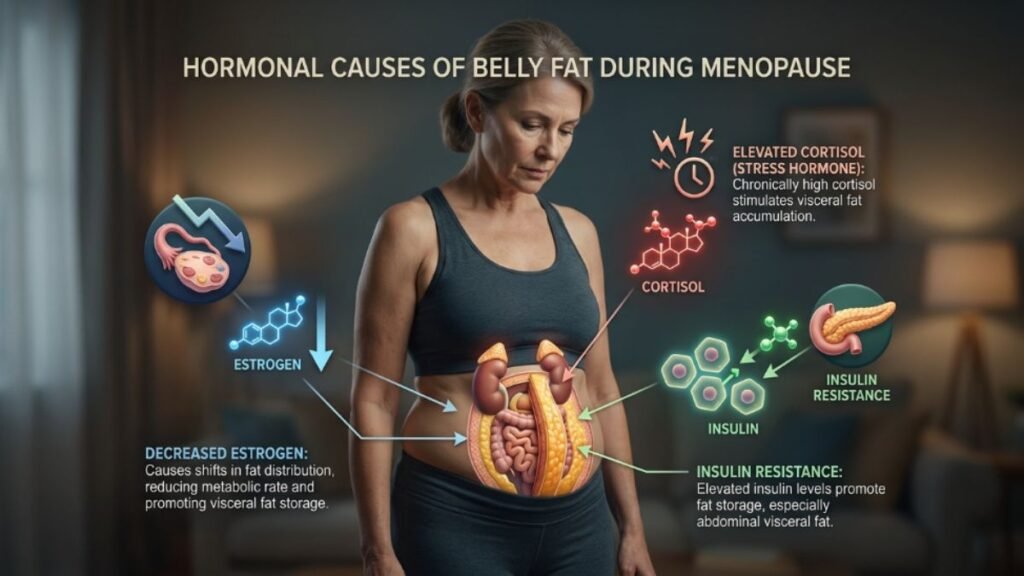
Before menopause, estrogen directs fat storage toward the hips, thighs, and buttocks — the classic pear-shaped distribution associated with reproductive-age women. This is not cosmetic coincidence. Estrogen actively suppresses fat cell proliferation in the abdominal region while promoting subcutaneous fat storage in the lower body.
When estrogen declines, that directional signal disappears. The body does not simply stop storing fat — it redirects where it stores fat. Visceral fat, which accumulates around the internal organs in the abdominal cavity, becomes the primary storage site. Unlike subcutaneous fat just beneath the skin, visceral fat is metabolically active in ways that compound the problem: it secretes inflammatory compounds, interferes with insulin signaling, and drives further fat accumulation in a self-reinforcing cycle.
According to the Mayo Clinic, this hormonal shift — not aging itself — is the primary driver of the abdominal weight gain pattern most women experience after menopause. The distinction matters because it changes what interventions are actually relevant.
Insulin Resistance: The Hidden Accelerator
Estrogen also plays a direct role in maintaining insulin sensitivity. As its levels decline, cells become progressively less responsive to insulin — meaning glucose stays in circulation longer, more of it gets converted to fat, and that fat preferentially goes to the abdomen.
The result is a pattern that baffles many women: they eat the same food they always have, maintain similar activity levels, and still gain weight steadily in the midsection. The caloric math has not changed. The metabolic efficiency with which those calories are processed has.
Insulin resistance after menopause is not uniform — it varies significantly based on sleep quality, stress levels, dietary composition, and physical activity patterns. This is important because it means the trajectory is not fixed. The body’s insulin sensitivity can be meaningfully improved through targeted interventions, even after menopause.
Cortisol and the Stress-Fat Connection
The third hormonal driver is cortisol — and it is the one most often overlooked. Cortisol does two things relevant to belly fat: it directly stimulates visceral fat storage, and it drives cravings for high-sugar, high-fat foods that accelerate that storage.
For women over 50, baseline cortisol is often elevated — not because of unusual life stress, but because of the physiological stress of hormonal transition itself. Disrupted sleep, hot flashes, and the immune and inflammatory changes that accompany menopause all elevate cortisol independent of psychological stress. The result is a chronic, low-grade cortisol signal that continuously reinforces visceral fat accumulation.
Why the Strategies That Worked Before No Longer Do
This is perhaps the most practically important thing to understand: the failure of previous approaches is not personal. It is physiological.
Caloric Restriction Becomes Self-Defeating
Moderate caloric restriction works well for weight loss when the hormonal environment is intact. After menopause, aggressive caloric restriction can trigger the opposite of the intended effect — by elevating cortisol (which the body releases in response to caloric deprivation), suppressing thyroid function, and accelerating muscle loss.
Muscle tissue is metabolically expensive — it burns calories at rest. Losing it lowers the basal metabolic rate, which means the body requires fewer calories to maintain weight. The woman who aggressively cuts calories after menopause often ends up lighter on the scale but with a higher body fat percentage and a slower metabolism than when she started.
Cardio-Only Exercise Misses the Point
Long-duration cardiovascular exercise has real benefits — cardiovascular health, mood regulation, insulin sensitivity in the short term. But for visceral fat reduction specifically, resistance training produces significantly stronger results. Building and maintaining muscle mass improves insulin sensitivity continuously, raises resting metabolic rate, and directly counters the muscle loss that accelerates after menopause.
The practical implication: a 45-minute walk five days a week, while valuable, addresses a different problem than two to three sessions of resistance training per week. Women who add resistance training to their routine — even at moderate intensity — consistently report better body composition outcomes than cardio-only approaches.
Targeting Belly Fat Directly Does Not Work
Spot reduction — the idea that exercising a specific area burns fat in that area — is not physiologically possible. Abdominal exercises strengthen the underlying muscles but do not preferentially reduce visceral fat. Visceral fat responds to systemic metabolic interventions: insulin sensitivity improvements, cortisol reduction, hormonal support, and overall body composition changes.

The metabolic shifts that begin in your 40s accelerate after menopause — understanding how metabolism changes after 40 provides the foundation for everything covered in this article.
What Actually Moves the Needle on Visceral Fat After Menopause
Given the hormonal context, effective approaches to belly fat after menopause target the underlying drivers — not just calories.
Protein Intake: The Most Underutilized Lever
Protein does several things relevant to visceral fat reduction after menopause. It preserves muscle mass during weight loss, which protects metabolic rate. It has the highest thermic effect of any macronutrient — meaning the body burns more calories digesting it. And it produces stronger satiety signals than carbohydrates or fat, which reduces total caloric intake without the cortisol-elevating effect of deliberate restriction.
Current research suggests that women over 50 require meaningfully more protein than standard guidelines recommend — in the range of 1.2–1.6g per kilogram of body weight daily, distributed across meals rather than concentrated in one sitting. A 70kg woman, by this standard, needs 84–112g of protein daily — significantly more than most women in this age group consume.
Sleep Quality as a Metabolic Intervention
Poor sleep is not a lifestyle inconvenience for women over 50 — it is a direct driver of visceral fat accumulation. Sleep deprivation elevates cortisol, impairs glucose metabolism, increases appetite hormones (particularly ghrelin), and reduces the growth hormone release that normally supports fat oxidation during sleep.
Research published by the National Institutes of Health consistently shows that sleep duration and quality are independent predictors of visceral fat accumulation — meaning that women who address sleep quality alongside diet and exercise produce meaningfully better body composition outcomes than those who focus on diet and exercise alone.
Improving sleep after menopause often requires addressing the causes of disruption directly — hot flashes, cortisol regulation, magnesium status (400mg of magnesium glycinate before bed is well-supported for sleep quality improvement), and consistent sleep timing.
Anti-Inflammatory Eating Patterns
Visceral fat secretes pro-inflammatory cytokines that drive further fat storage. Reducing systemic inflammation through dietary choices creates a feedback loop in the opposite direction — less visceral fat, less inflammation, improved insulin sensitivity, better fat oxidation.
The dietary patterns with the strongest evidence for visceral fat reduction are not low-fat or low-calorie per se — they are anti-inflammatory: rich in omega-3 fatty acids (fatty fish, walnuts, flaxseed), polyphenols (berries, leafy greens, olive oil), and fiber (legumes, vegetables, whole grains), while minimizing refined carbohydrates, seed oils, and ultra-processed foods.

For women considering structured eating windows as part of their approach, how intermittent fasting affects hormones after 50 is a critical read before starting any protocol.
The Role of Metabolic Support After Menopause
Diet, exercise, and sleep form the foundation. But for many women over 50, the hormonal changes driving visceral fat accumulation are significant enough that lifestyle interventions alone produce slower results than expected — and that gap is where targeted metabolic support becomes relevant.
The compounds with the strongest evidence for supporting visceral fat reduction in this population work through specific mechanisms: improving insulin sensitivity, reducing inflammatory markers, supporting fat oxidation at the cellular level, and modulating the cortisol response that drives abdominal fat storage.
Affiliate Disclosure: This article contains affiliate links. If you click through and make a purchase, Sowing Healthy may earn a small commission — at no extra cost to you. We only recommend products we have genuinely researched and believe may offer value to our readers. Our editorial opinions are always our own.
For women who have addressed the foundational pillars and want additional support targeting the specific metabolic environment of post-menopausal fat storage, this approach to visceral fat support after menopause has become one of the more researched options in this category — formulated around the hormonal and metabolic context that standard weight management products typically ignore.
Realistic Expectations: What the Timeline Actually Looks Like
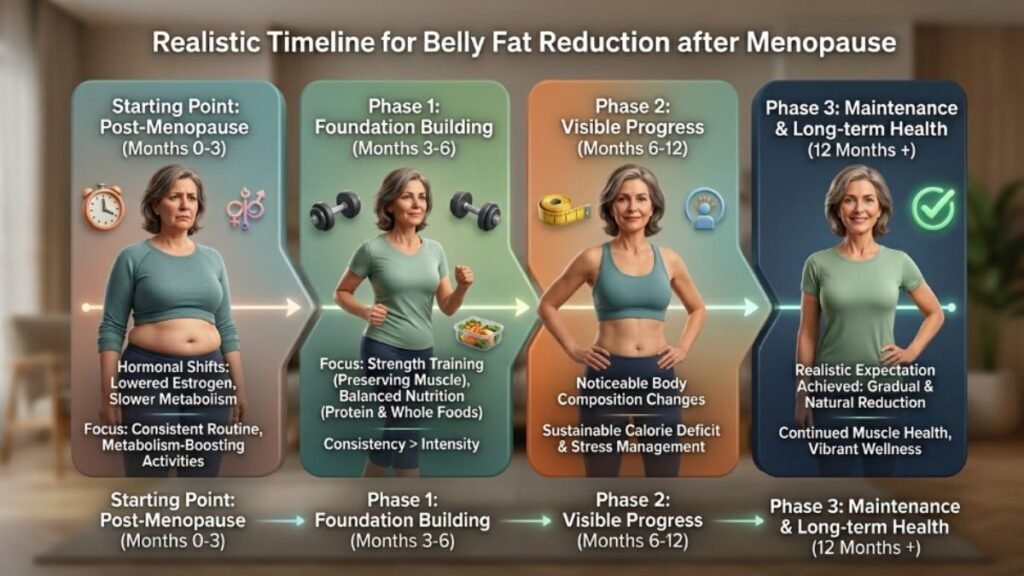
One of the reasons women abandon effective approaches is unrealistic timelines. Visceral fat — particularly the hormonally-driven accumulation of post-menopause — responds more slowly than subcutaneous fat to intervention. Understanding the actual timeline prevents the discouragement that leads to abandonment.
Weeks 1–4: Metabolic changes begin before visible changes appear. Improved fasting insulin, reduced inflammation markers, and better energy regulation typically precede any change in waist circumference. This phase requires patience.
Weeks 4–8: Women who have addressed sleep, increased protein intake, and added resistance training begin to notice changes in body composition — often a reduction in bloating and early waist measurement changes even before the scale moves significantly.
Weeks 8–16: This is the window where meaningful visceral fat reduction becomes measurable. Consistency in this phase — not perfection — is the determining variable. Women who sustain their approach through minor setbacks consistently outperform those who stop and restart.
Beyond 4 months: Hormonal adaptations begin to support rather than resist the changes. Improved insulin sensitivity makes fat loss progressively easier rather than harder — the opposite of what most women experience with short-term restriction approaches.
Medical Disclaimer - The information provided in this article is for educational purposes only and is not intended to serve as medical advice, diagnosis, or treatment. Results vary from person to person. If you have a medical condition, take prescription medications, or have concerns about your hormonal health or body composition, consult a licensed healthcare provider before making significant changes to your diet, exercise, or supplement routine.
Conclusion
Belly fat after menopause is not a calorie problem dressed in new clothes. It is a hormonal and metabolic shift that requires a response calibrated to what actually changed — not a repetition of approaches designed for a different biological context.
The women who navigate this transition most effectively are the ones who stopped blaming themselves for the failure of old strategies and started asking better questions about what their bodies actually need now. More protein. Resistance training. Sleep quality as a priority. Anti-inflammatory food choices. And where the hormonal layer is significant enough to require additional support, targeted metabolic support built for the post-menopausal environment can close the gap that lifestyle changes alone sometimes cannot.
Your body after menopause is not working against you. It has shifted to a different set of rules — and once you understand those rules, you can work with them.
Frequently Asked Questions about Belly Fat After Menopause Metabolism
Is belly fat after menopause inevitable?
The hormonal shift that redistributes fat toward the abdomen after menopause is a near-universal biological process. However, the extent of that redistribution is not fixed — it is significantly influenced by lifestyle factors, particularly sleep quality, dietary protein intake, resistance training, and stress management. Women who address these variables consistently experience meaningfully less visceral fat accumulation than those who do not.
Why did my belly suddenly get bigger after menopause even though I didn’t change my diet?
Because your hormonal environment changed what your diet does. The decline in estrogen reduces insulin sensitivity and removes the hormonal signal that previously directed fat toward the hips and thighs. The same caloric intake now produces different metabolic outcomes — more glucose staying in circulation, more fat being stored viscerally. This is not a failure of your diet. It is a hormonal change that requires a dietary adjustment in response.
Does menopause belly fat ever go away?
Yes — but it responds to different interventions than the weight gain patterns of earlier life stages. Visceral fat accumulated after menopause responds well to resistance training, improved insulin sensitivity, sleep optimization, and anti-inflammatory eating patterns. The timeline is longer than many women expect — meaningful reduction typically requires 3–6 months of consistent intervention — but it is entirely achievable.
Is intermittent fasting a good approach for menopause belly fat?
For some women, yes — with important caveats. The estrogen decline that drives visceral fat also affects how the body responds to fasting. Aggressive fasting windows can elevate cortisol in post-menopausal women in ways that counterproductively increase abdominal fat storage. Conservative windows (12–14 hours) are generally more effective and better tolerated than the 16:8 protocols most commonly promoted.
What type of exercise is most effective for belly fat after menopause?
Resistance training has the strongest evidence for visceral fat reduction after menopause — stronger than cardio alone. Two to three sessions per week of moderate-intensity resistance training, combined with daily movement (walking, light activity), produces better body composition outcomes than cardio-dominant approaches. The mechanism is primarily through improved insulin sensitivity and preservation of muscle mass, which maintains metabolic rate.
Can supplements help with belly fat after menopause?
Certain compounds have documented effects on the metabolic drivers of visceral fat — particularly those that improve insulin sensitivity, reduce inflammatory markers, and support fat oxidation. Supplements work most effectively as additions to the foundational interventions (sleep, protein, resistance training), not as replacements for them. The compounds with the strongest evidence include berberine, omega-3 fatty acids, magnesium, and targeted botanical extracts that modulate the cortisol pathway.
How much protein do I actually need after menopause to protect muscle and support fat loss?
Current research suggests 1.2–1.6g of protein per kilogram of body weight daily for women over 50 — significantly above general population guidelines. For a 68kg woman, that means 82–109g of protein per day. Distribution matters as much as total amount: spreading protein across three to four meals, rather than concentrating it in one, optimizes muscle protein synthesis throughout the day.

Sarah Mitchell is a health and wellness writer specializing in longevity, natural supplementation, and healthy aging for adults over 40. With a background in nutrition sciences and years of research into evidence-based approaches to long-term well-being, she founded Sowing Healthy to provide honest, research-grounded guidance for people navigating the health changes that come with midlife. Sarah believes that good health is built gradually — through the right information, consistent habits, and supplements that actually earn their place.