


Best Probiotics for Women Over 50: How to Choose One That Actually Works
If you’re over 50 and your stomach suddenly feels like it has a mind of its own — more bloating after meals you’ve eaten for decades, slower digestion, a gut that just feels off — you are not imagining it, and you are very much not alone. Something real changes in a woman’s body around this stage, and your digestion is often one of the first places you feel it.
Here’s a number that tends to surprise people: researchers estimate that around 70% of your immune cells live in and around your gut. So when the balance of bacteria in your digestive system shifts, it doesn’t just affect your stomach — it can ripple out to your energy, your mood, and how often you get sick.
The good news? This is one of the most fixable changes of midlife. A well-chosen probiotic can genuinely help. The catch is that the supplement aisle is a minefield of vague labels and big promises, and most products quietly fail the exact test that matters. This guide will walk you through what actually changes after 50, what separates a real probiotic from an expensive placebo, and how to choose one with confidence — no pressure, no hype, just the criteria I’d want my own mother to know.
Before we get into the best probiotics for women over 50, a quick note: this content is for informational and educational purposes only. It does not constitute medical advice. Please consult your healthcare provider before making changes to your diet, supplements, or health routine.
Why Your Gut Changes After 50 (And Why It’s Not Your Imagination)
For most of your life, your gut microbiome — the trillions of bacteria living in your digestive tract — stays relatively stable and diverse. Diversity is the key word. A varied community of good bacteria is what keeps digestion smooth, inflammation low, and your immune system responsive.
Around menopause, two things happen at once. First, the natural diversity of beneficial gut bacteria tends to decline with age. Second, the drop in estrogen reshapes the gut environment itself — estrogen and the gut microbiome are deeply linked, which is part of why so many women notice digestive changes arriving right alongside hot flashes and sleep changes.
Add the everyday factors that pile up over the years — courses of antibiotics, more medications, more stress, a slower-moving digestive tract — and you have the perfect recipe for bloating, irregularity, and that heavy, sluggish feeling after eating. None of this means something is wrong with you. It means your gut could use some reinforcements.
For the bigger picture of how digestion shifts in this decade, see our deeper guide on digestive problems after 50.

What Makes the Best Probiotics for Women Over 50 Different
Not every probiotic is built for where you are now. A product designed for a 25-year-old athlete is solving a different problem than yours.
For women in this stage of life, the most useful formulas tend to do three things at once: rebuild general digestive balance, support the strains that matter for women’s health specifically (including vaginal and urinary balance, which becomes more relevant after menopause), and survive the journey to your gut intact.
That last point is where most products quietly fall apart. A label can promise billions of bacteria, but if those bacteria are killed by stomach acid before they arrive — or if the count on the label is measured at the factory rather than at the moment you swallow the capsule — you’re paying for good intentions, not results. The best options are built to actually reach your intestines alive.
The 5 Things to Look for on a Probiotic Label
Affiliate Disclosure: This article contains affiliate links. If you click through and make a purchase, Sowing Healthy may earn a small commission — at no extra cost to you. We only recommend products we have genuinely researched and believe may offer value to our readers. Our editorial opinions are always our own.
This is the part that puts you back in control. Once you know what to look for, you can walk past 90% of the shelf without a second glance. Here are the five non-negotiables.
1. Named strains, not vague blends. A trustworthy label tells you the exact strain — for example, Lactobacillus acidophilus or Bifidobacterium lactis — not just “probiotic blend.” Strains are like breeds of dog: the genus tells you a little, but the specific strain is what determines the benefit. If a product hides behind a “proprietary blend,” you have no way to know what you’re actually taking.
2. A meaningful CFU count. CFU (colony-forming units) is the measure of live bacteria. For general gut support, most well-formulated products land somewhere in the 10–50 billion CFU range. More isn’t automatically better — but a serious formula will state a real, substantial number, ideally guaranteed through the expiration date, not just at manufacture.
3. Survival technology. Look for acid-resistant or delayed-release capsules, or strains specifically chosen to survive stomach acid. This is the difference between bacteria that reach your gut and bacteria that don’t.
4. Transparent, clean labeling. You should be able to read the full ingredient list and understand it. No mystery fillers, no undisclosed amounts. This single habit — reading the label like you’d read a nutrition panel — is the most powerful skill you can build.
5. Quality manufacturing. A reputable product is made in a facility that follows GMP (Good Manufacturing Practices) and is FDA-registered. One honest note here: by law, the FDA does not “approve” any dietary supplement before it’s sold, so any product claiming to be “FDA-approved” is waving a red flag. What you can and should look for is GMP certification, FDA-registered facilities, and third-party testing.
When a women’s formula checks all five of these boxes — a clean formula that lists every strain and its dose right on the label — you’ve found something worth your trust, because it’s giving you exactly the transparency the rest of the aisle hides.
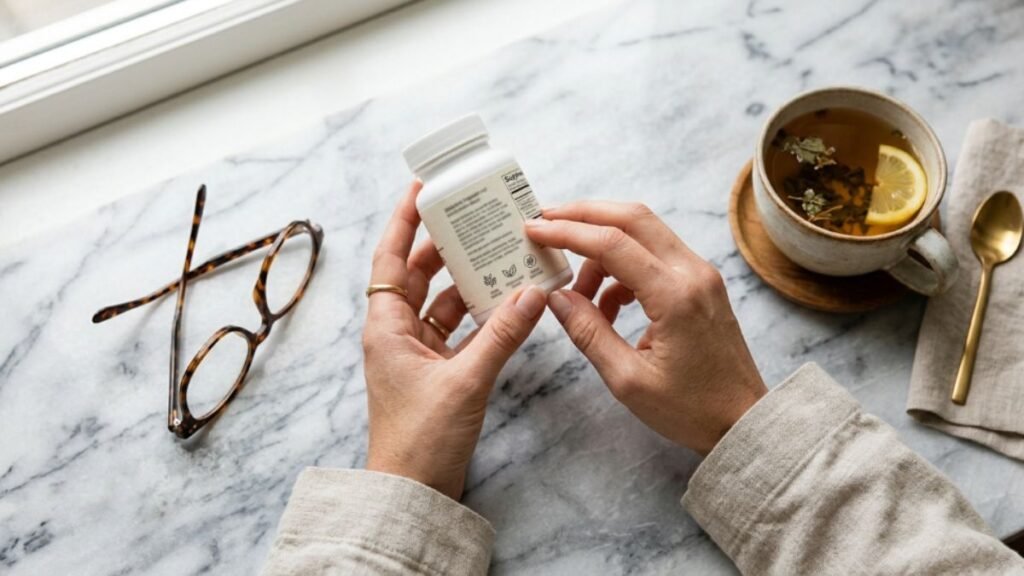
The Strains That Matter Most for Women in This Stage of Life
You don’t need a microbiology degree, but a few names are worth recognizing, because they show up in the research again and again for women’s gut and overall health:
- Lactobacillus acidophilus — one of the most studied strains for digestive balance and, importantly for women, for supporting healthy vaginal and urinary flora.
- Lactobacillus plantarum — researched for easing bloating, gas, and general digestive comfort.
- Lactobacillus gasseri and Lactobacillus paracasei — associated in studies with metabolic and digestive support.
- Bifidobacterium lactis — a workhorse for regularity and immune support, and one of the strains that tends to decline with age.
A thoughtfully built women’s formula combines several of these rather than betting on a single one. Pairing them with a prebiotic — a fiber like inulin that feeds the good bacteria once they arrive — and something like cranberry for urinary support is a sign the product was designed with a woman’s whole picture in mind, not just a generic gut.
If you’d like a concrete example of what that looks like in practice, one option pairs these well-studied strains with organic prebiotics and cranberry in a single daily capsule — a useful benchmark for the standard you’re now equipped to hold every product to.
How to Actually Take a Probiotic So It Works
Even the best probiotic underperforms if it’s taken haphazardly. A few simple habits make a real difference:
- Be consistent. Probiotics work by gradually shifting your gut population. Take it daily, ideally at the same time.
- Mind the timing. Many strains do best taken on a relatively empty stomach — first thing in the morning or before bed works well for most people.
- Give it time. Some women notice lighter digestion within a week or two; for others, the fuller benefits — steadier regularity, less bloating, better resilience — show up over one to three months. This is a slow, compounding kind of help, not an overnight switch.
- Pair it with fiber. A diet with plenty of plants and fermented foods gives your new bacteria something to thrive on.

Realistic Expectations: What a Probiotic Can and Can’t Do
Here’s the honest part, because you deserve honesty more than hype.
A good probiotic can meaningfully support digestive comfort, regularity, and the balance of bacteria that tends to slip after 50. Many women feel genuinely better. But a probiotic is a supporting actor, not a cure. It won’t undo a difficult diet, replace your medication, or fix a problem that needs medical attention.
So please use this as your dividing line: persistent abdominal pain, unexplained weight loss, blood in your stool, or any sudden, significant change in your digestion is not something to manage with a supplement. That’s a conversation with your doctor, and the sooner the better. Probiotics are for supporting a generally healthy gut through a normal life transition — not for diagnosing or treating disease.

Bringing It Together
If your gut has felt different lately, you now know why — and more importantly, you know exactly what to do about it. The change you’re feeling after 50 is real, it’s common, and it responds beautifully to the right support.
The best probiotics for women over 50 aren’t the loudest or the most expensive. They’re the transparent ones: named strains, a real CFU count, survival technology, a clean label, and quality manufacturing. Hold every product to those five standards and you simply can’t be fooled.
Choose one, give it a consistent month or two, keep feeding your gut well, and pay attention to how you feel. You have more control over this chapter of your health than anyone ever told you — and that’s a wonderful place to start.
Frequently Asked Questions
At what age should women start taking a probiotic?
There’s no strict age, but the years around menopause are a natural time to consider one, since gut diversity tends to decline and estrogen shifts change the gut environment. If you’re noticing more bloating or irregularity, it’s a reasonable time to start.
How long does it take for a probiotic to work?
Many women feel lighter digestion within one to two weeks, while fuller benefits like steadier regularity often build over one to three months of consistent daily use. Patience and consistency matter more than dose.
Can I just eat yogurt instead of taking a supplement?
Fermented foods like yogurt, kefir, kimchi, and sauerkraut are wonderful and worth including. They tend to offer smaller, less targeted amounts than a dedicated supplement, so many women do both — food for variety, a supplement for a reliable daily dose.
Are probiotics safe to take with my other medications?
Probiotics are generally well tolerated, but because everyone’s situation is different — especially if you take prescription medication or have a weakened immune system — it’s best to check with your doctor or pharmacist before starting.
Do I need a “women’s” probiotic specifically, or will any do?
Any quality probiotic can support general gut health, but formulas built for women often add strains and ingredients (like cranberry and specific Lactobacillus strains) that support vaginal and urinary balance — concerns that become more relevant after menopause.
Is a higher CFU count always better?
No. Beyond a certain point, more isn’t necessarily better, and for sensitive stomachs a very high count can even cause temporary discomfort. A meaningful count in the 10–50 billion range, from well-chosen strains, matters more than chasing the biggest number on the shelf.
What’s the difference between a probiotic and a prebiotic?
Probiotics are the live beneficial bacteria themselves; prebiotics are the fibers that feed them. The two work as a team, which is why many of the best women’s formulas include both.

Sarah Mitchell is a health and wellness writer specializing in longevity, natural supplementation, and healthy aging for adults over 40. With a background in nutrition sciences and years of research into evidence-based approaches to long-term well-being, she founded Sowing Healthy to provide honest, research-grounded guidance for people navigating the health changes that come with midlife. Sarah believes that good health is built gradually — through the right information, consistent habits, and supplements that actually earn their place.