

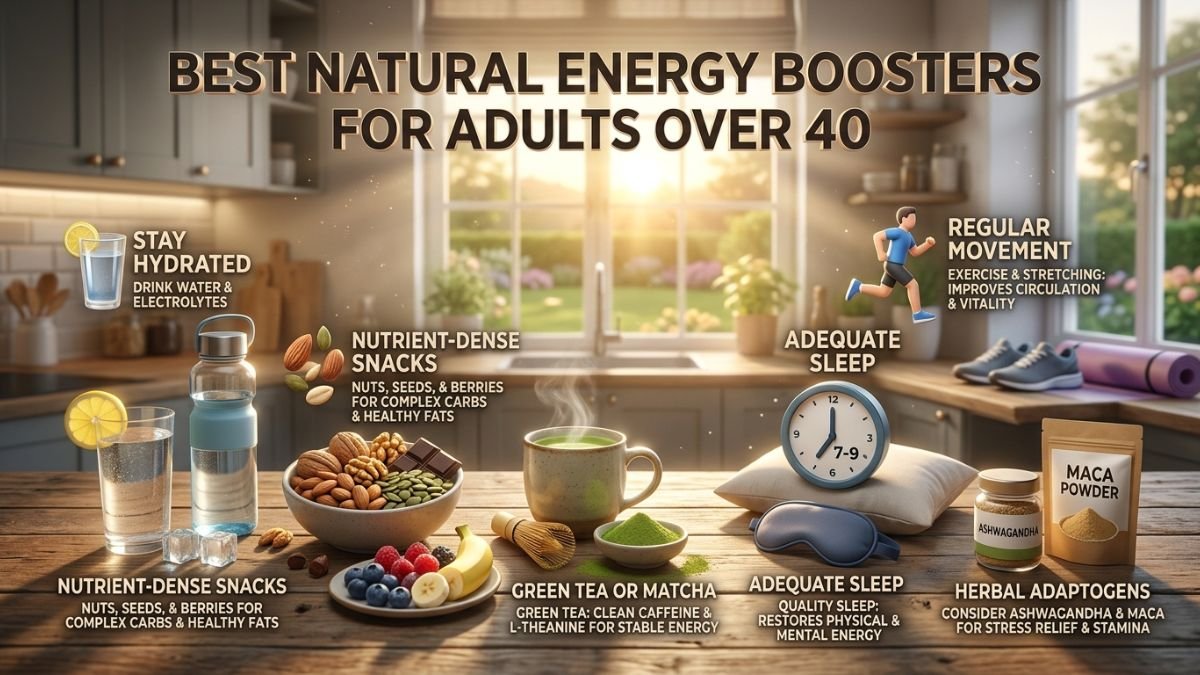
Best Natural Energy Boosters for Adults Over 40
This content is for informational and educational purposes only. It does not constitute medical advice. Please consult your healthcare provider before making changes to your diet, supplements, or health routine.
The search for effective natural energy boosters over 40 is one of the most common — and most frustrated — journeys in midlife health. You’ve probably already tried the obvious things: more coffee, earlier bedtimes, cutting out sugar. And yet the fatigue persists.
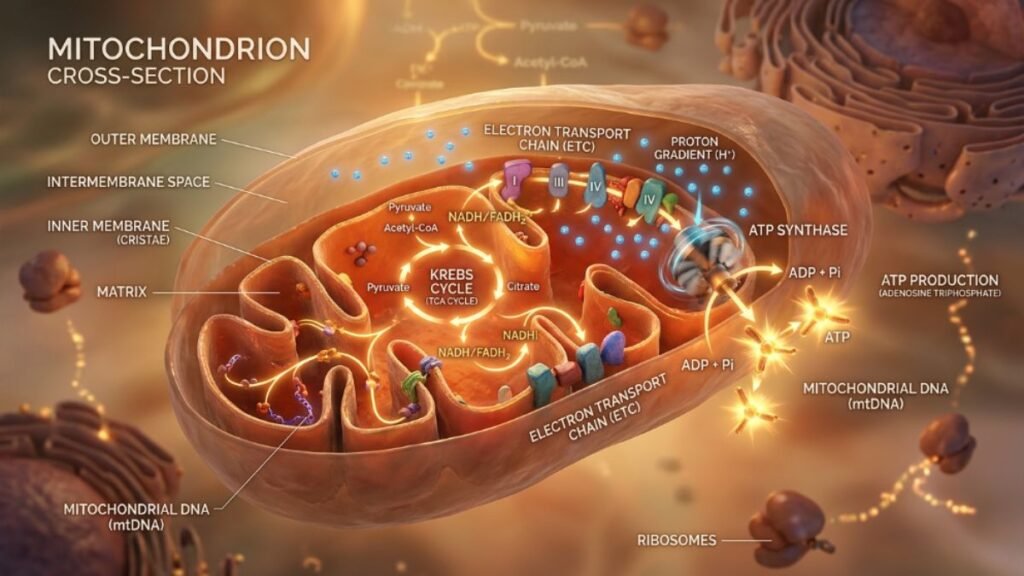
That persistent, low-grade exhaustion that settles into your 40s is not laziness. It’s biology. Your mitochondria — the microscopic structures inside every cell that produce energy — begin to lose efficiency after 40. Hormone levels shift. Nutrient absorption declines. Chronic stress quietly depletes the very compounds your body needs to generate energy at the cellular level.
According to the National Institutes of Health, fatigue is one of the most commonly reported symptoms among adults aged 40–60 — and it’s multifactorial. There is rarely a single cause, which means there is rarely a single fix. But there are well-researched, evidence-based interventions that can make a meaningful difference.
This article covers the most effective natural energy boosters supported by current research — including specific forms, dosages, timing, and what to discuss with your doctor before starting. No vague “eat better and sleep more” advice. Concrete, actionable information for adults who deserve better answers.
Why Energy Declines After 40: The Real Mechanisms
Before exploring solutions, it’s worth understanding what’s actually happening — because targeted interventions work far better than guesswork.
Energy at the cellular level is produced through a process called oxidative phosphorylation, which takes place inside the mitochondria. Several converging factors impair this process after 40:
- NAD+ decline: This critical coenzyme, essential for mitochondrial energy production, decreases by up to 50% between ages 40 and 60.
- CoQ10 depletion: Coenzyme Q10, a key electron carrier in the mitochondrial energy chain, declines naturally with age and is further depleted by statin medications.
- Hormonal changes: Declining estrogen, progesterone, and testosterone all affect energy metabolism, sleep quality, and stress resilience.
- Nutrient absorption decline: The stomach produces less acid with age, impairing absorption of critical energy-related nutrients including B12, magnesium, and iron.
- Chronic HPA axis activation: Persistent stress keeps cortisol elevated, which depletes adrenal reserves and disrupts the deep sleep cycles where physical and neurological restoration actually occur.
Understanding these mechanisms helps explain why the natural energy boosters discussed below are specifically targeted — not generic wellness fluff.
💡 Practical Tip: If you’ve been struggling with fatigue for more than 3 months, request a full panel from your doctor before starting supplements: TSH (thyroid), B12, ferritin (not just hemoglobin), fasting glucose, and a comprehensive metabolic panel. Supplementing without knowing your baseline is guesswork.
Magnesium: The Energy Mineral Most Adults Are Missing
If there is one supplement that consistently surprises people with how much it changes their energy and sleep quality, it is magnesium.
An estimated 48% of Americans do not meet the daily recommended intake for magnesium — and this deficiency is even more common in adults over 40, due to declining dietary intake and reduced absorption efficiency. Given that magnesium is involved in over 300 enzymatic reactions in the body — including the production of ATP (adenosine triphosphate, the body’s primary energy currency) — even a mild deficiency has measurable effects on energy, mood, and sleep.
What Magnesium Depletion Actually Feels Like
Low magnesium often doesn’t produce dramatic symptoms. It shows up as:
- Persistent low-grade fatigue that sleep doesn’t fully resolve
- Muscle cramps and tension, particularly at night
- Difficulty falling or staying asleep
- Heightened anxiety and stress reactivity
- Headaches, particularly tension-type
Which Form Matters
Not all magnesium supplements are created equal. The form determines how much is actually absorbed and where it works in the body.
- Magnesium glycinate: Best overall form for fatigue and sleep. Highly bioavailable, gentle on the digestive system, supports relaxation.
- Magnesium malate: Particularly well-suited for energy production and muscle fatigue — the malate component directly participates in the Krebs cycle (energy pathway).
- Magnesium oxide: Commonly found in cheap supplements. Very poor bioavailability — avoid it.
Recommended dose: 300–400 mg of elemental magnesium daily, ideally in the evening or split between meals.
👉 But the mechanisms behind that relentless midlife exhaustion go deeper than most people realize — if you want the full picture, [this breakdown of why you feel exhausted after 40] explains every laye
Why Am I Always Tired at 40
Vitamin B12: When Deficiency Is Quietly Draining You
Vitamin B12 is essential for red blood cell formation, neurological function, and DNA synthesis — all processes that directly affect energy levels. And after 40, your ability to absorb it from food decreases significantly.
The culprit is a protein called intrinsic factor, produced by the stomach lining. With age, stomach acid production declines, reducing intrinsic factor availability and therefore B12 absorption. People taking metformin (for blood sugar) or proton pump inhibitors (for acid reflux) — both common after 40 — have particularly high rates of B12 depletion.
Symptoms That Often Go Unattributed
B12 deficiency can cause profound fatigue, cognitive fog, mood changes, and tingling in the hands and feet — symptoms commonly attributed to “normal aging” or stress rather than investigated as a nutritional issue.
Choosing the Right Form
- Methylcobalamin: The active, biologically ready form. Preferred for absorption and neurological support, especially in adults over 40.
- Cyanocobalamin: The synthetic form found in most mass-market supplements. Less effective for neurological benefits and requires conversion in the body.
- Sublingual or spray delivery: Bypasses digestive absorption limitations — particularly relevant for adults with reduced stomach acid.
Recommended dose: 500–1,000 mcg of methylcobalamin daily, taken in the morning.
⚠️ Attention: B12 testing via standard blood work typically measures total B12 in serum, which can appear normal even when active B12 is insufficient. If you have persistent neurological symptoms or fatigue, ask specifically for methylmalonic acid (MMA) or holotranscobalamin testing for a more accurate picture.
CoQ10: Fueling Your Cellular Power Plants

Coenzyme Q10 (CoQ10) is one of the most important molecules in cellular energy production. It acts as an electron carrier in the mitochondrial respiratory chain — the process by which your cells convert nutrients into usable energy.
The body produces CoQ10 naturally, but production declines measurably after age 40. By age 50, CoQ10 levels in heart tissue can be 40% lower than peak levels. Additionally, statin medications — commonly prescribed after 40 for cholesterol management — significantly deplete CoQ10, which helps explain why muscle fatigue and weakness are among the most common statin side effects.
Ubiquinol vs. Ubiquinone: An Important Distinction After 40
CoQ10 exists in two forms in the body:
- Ubiquinone: The oxidized form, common in most supplements. Requires conversion to ubiquinol before use.
- Ubiquinol: The active, reduced form. Directly usable by the body, with significantly higher bioavailability — particularly important after 40, when conversion efficiency declines.
For adults over 40, ubiquinol is the recommended form.
Recommended dose: 100–200 mg of ubiquinol daily, taken with breakfast (it is fat-soluble and requires dietary fat for absorption).
Research published in Nutrition found that CoQ10 supplementation significantly reduced fatigue and improved physical performance scores in adults with low baseline levels — benefits typically noticeable within 4–8 weeks of consistent use.
Ashwagandha: The Adaptogen for Stress-Driven Exhaustion
Not all fatigue comes from nutritional deficiency or cellular decline. A significant portion of midlife exhaustion is stress-driven — fueled by chronically elevated cortisol, overstimulated adrenal function, and the relentless demands of a busy adult life.
Ashwagandha (Withania somnifera) is an adaptogenic herb with one of the strongest clinical evidence bases among herbal supplements. Adaptogens help the body regulate its stress response — reducing cortisol output, improving resilience, and restoring more balanced energy patterns over time.
What the Research Shows
A well-designed 2019 double-blind, placebo-controlled study published in Medicine found that adults taking 240 mg of a standardized ashwagandha extract daily experienced significantly reduced cortisol levels, improved sleep quality, and notably better self-reported energy and mental clarity compared to placebo — over 60 days.
Choosing the Right Extract
Look specifically for KSM-66 or Sensoril — the two most clinically researched standardized extracts. Generic ashwagandha powder provides inconsistent withanolide content and produces less reliable results.
Recommended dose: 300–600 mg of KSM-66 extract daily. Can be taken as a single morning dose or split (morning/evening). Allow 4–8 weeks for full effect.
💡 Practical Tip: Ashwagandha is particularly effective for adults whose fatigue is accompanied by anxiety, poor sleep, and high stress. If your exhaustion feels more like burnout than physical depletion, this is often the first supplement worth trying.
Iron and Ferritin: The Hidden Energy Drain Women Often Miss

Iron deficiency is the most common nutritional deficiency worldwide — and it is particularly prevalent in women in their 40s, due to menstrual losses that may persist into perimenopause.
Here is what most standard blood tests miss: ferritin — the body’s iron storage protein — can be critically low even when hemoglobin appears normal. This condition, sometimes called “iron deficiency without anemia,” produces significant fatigue, poor exercise tolerance, brain fog, and shortness of breath — often for years before it shows up on a standard complete blood count.
Many women are told their “iron is fine” based on hemoglobin alone, when ferritin levels tell a very different story.
What to request: Ask specifically for a serum ferritin level alongside your regular iron studies. Research suggests that ferritin below 30 ng/mL is associated with fatigue, and optimal energy typically requires ferritin above 50 ng/mL.
👉 Energy is just one dimension — for a full evidence-based picture, [this guide on which supplements are actually worth it after 40] covers the complete landscape
Natural Supplements for Adults Over 40: What Actually Works (and What to Skip)
⚠️ Attention: Iron supplementation should only be initiated after confirmed deficiency via testing. Excess iron is pro-inflammatory and harmful. Do not supplement iron based on symptoms alone — always verify with blood work first.
NAD+ Precursors: Cellular Energy and the Emerging Science
NAD+ (nicotinamide adenine dinucleotide) is a coenzyme central to mitochondrial energy production — and its levels decline by approximately 50% between the ages of 40 and 60. This decline is one of the key molecular drivers of age-related energy loss and is an active area of longevity research.
Two primary NAD+ precursors are currently available as supplements:
- NMN (nicotinamide mononucleotide): Converts to NAD+ efficiently in most tissues. Widely studied in animal models; human research growing.
- NR (nicotinamide riboside): Earlier to market, somewhat more human trial data available. Both show similar mechanisms.
Honest Assessment of the Evidence
It’s important to be transparent: while the preclinical (animal) evidence for NAD+ precursors is compelling, human clinical trials are still limited in size and duration. A 2022 clinical trial in Nature Aging showed that NMN supplementation in older adults increased blood NAD+ levels and improved muscle insulin sensitivity — a meaningful finding. But we do not yet have long-term safety data or large-scale outcome studies.
Recommended dose: 250–500 mg NMN or NR daily, taken in the morning, ideally on an empty stomach or with a light meal.
A Practical Supplement Protocol for Energy After 40
Rather than overwhelming yourself with every supplement on this list at once, a staged approach produces better results and makes it easier to identify what is actually helping.
| Supplement | Form | Daily Dose | Timing | Start Week |
|---|---|---|---|---|
| Magnesium glycinate | Chelated | 300–400 mg | Evening | Week 1 |
| Vitamin B12 | Methylcobalamin | 500–1,000 mcg | Morning | Week 1 |
| CoQ10 | Ubiquinol | 100–200 mg | Breakfast (with fat) | Week 3 |
| Ashwagandha | KSM-66 extract | 300–600 mg | Morning | Week 5 |
| NMN | Powder or capsule | 250–500 mg | Morning fasting | Week 7 |
Start with magnesium and B12 in week one — these address the most common deficiencies and tend to produce the most noticeable early results. Add one new supplement every 2 weeks to clearly attribute any changes you observe.
✓ Best Practice: Keep a simple daily energy journal — a 1–10 rating at waking, midday, and evening — for the first 8 weeks. This eliminates the guesswork of “is this working?” and gives you real data to discuss with your doctor.
👉 Improving your energy and supporting your metabolism are not separate goals. Our metabolism guide explains [exactly how the two are connected after 40] — and why addressing one often fixes the other.
How to Boost Metabolism After 40
When to Talk to Your Doctor Before Supplementing
Natural does not always mean harmless in every context — and some of the supplements on this list interact with common medications or require lab confirmation before use.
Talk to your physician before starting if:
- You take statins — your CoQ10 needs may be higher; also discuss the statin-fatigue connection directly
- You take metformin — B12 depletion is well-documented; testing and supplementation may be warranted
- You have kidney disease — magnesium and some B vitamins require caution
- You have thyroid conditions — ashwagandha may influence thyroid hormone levels
- You are perimenopausal — hormonal context significantly changes the priority order of interventions
A basic lab panel — TSH, serum B12, ferritin, fasting insulin, comprehensive metabolic panel — before starting provides a meaningful baseline and ensures your supplement choices are targeted, not speculative.
Medical Disclaimer: The information provided in this article is for educational purposes only and is not intended to serve as medical advice, diagnosis, or treatment. Results vary by individual. Consult a licensed healthcare professional before beginning any supplement protocol, particularly if you have existing health conditions or take medications.
Building Energy That Lasts — One Layer at a Time
Natural energy restoration after 40 is not about finding one magic supplement. It’s about identifying your specific deficiencies and depletion patterns — and addressing them systematically, with patience and consistency.
Magnesium and B12 for the deficiencies most adults carry silently. CoQ10 for the mitochondria working harder with declining resources. Ashwagandha for the cortisol and stress that silently drain your reserves. And NAD+ support for the cellular energy machinery at the core of how you feel every single day.
Start with testing. Build your protocol in stages. Track your results. Give your body the time it needs to respond.
You don’t have to accept exhaustion as a fixed condition of your 40s. The biology is real — and so are the solutions.
Frequently Asked Questions about Best Natural Energy Boosters for Adults Over 40
Which natural energy booster works the fastest for adults over 40?
Magnesium and vitamin B12 tend to produce the most noticeable early results — often within 1–3 weeks — particularly in adults who were deficient. CoQ10 and ashwagandha typically require 4–8 weeks for their full effect. NAD+ precursors show a slower, more gradual improvement in sustained energy levels.
Can I take all of these supplements together?
Most of these supplements can be taken together safely. However, the staged approach — introducing one every 2 weeks — is strongly recommended so you can identify what is helping and catch any individual sensitivities. Magnesium and ashwagandha pair particularly well as an evening stack for sleep and recovery support.
Is chronic fatigue after 40 always nutritional?
No — and that’s an important point. Persistent fatigue after 40 can have hormonal (thyroid, estrogen, testosterone), metabolic (blood sugar dysregulation, insulin resistance), psychological (anxiety, depression), cardiovascular, or sleep disorder causes. Nutritional deficiencies are common contributors, but they’re one piece of a larger picture. Medical evaluation is essential before attributing all fatigue to nutrition.
Does caffeine still work the same way after 40?
Caffeine metabolism slows with age, and many adults over 40 become more sensitive to its effects — particularly its impact on sleep quality and cortisol levels. High caffeine intake in the afternoon often undermines the sleep quality needed for genuine energy restoration. If you’re relying on caffeine to function, it’s worth investigating the root cause of fatigue rather than compensating indefinitely.
What’s the best time of day to take energy supplements?
B12, CoQ10, and NMN perform best in the morning. Magnesium glycinate is ideal in the evening — it supports sleep quality and overnight recovery. Ashwagandha can be taken in the morning to buffer daytime cortisol, or in the evening to support sleep, depending on your primary symptom.
Is ashwagandha safe for women in perimenopause?
Ashwagandha is generally well-tolerated and may be beneficial in perimenopause, as it helps regulate cortisol and can support thyroid function. However, it may influence thyroid hormone levels — which can be relevant if you’re being monitored for thyroid changes during this transition. Always discuss with your doctor if you have a thyroid condition.
How long before I see real results from a supplement protocol?
Realistic timelines: magnesium and B12 — 1–3 weeks for initial improvement. CoQ10 and ashwagandha — 4–8 weeks for full effect. NMN — 6–12 weeks for perceptible change. Supplements are not drugs. They support biochemical processes that operate on biological timelines. Consistency over weeks and months matters far more than dose size.

Sarah Mitchell is a health and wellness writer specializing in longevity, natural supplementation, and healthy aging for adults over 40. With a background in nutrition sciences and years of research into evidence-based approaches to long-term well-being, she founded Sowing Healthy to provide honest, research-grounded guidance for people navigating the health changes that come with midlife. Sarah believes that good health is built gradually — through the right information, consistent habits, and supplements that actually earn their place.