


Joint Pain After 40: Why It Happens and What Actually Helps
Joint pain after 40 is one of the most common — and most misunderstood — health complaints among adults in midlife. If your knees ache when you climb stairs, your hips feel stiff when you get out of bed in the morning, or your fingers swell after a long day at the desk, you are not alone. And more importantly, you are not simply getting old.
According to the CDC, an estimated 58.5 million Americans have been diagnosed with some form of arthritis, and the majority of new cases emerge between the ages of 40 and 65. But arthritis is only one piece of a much larger picture. The joint discomfort that millions of adults experience in midlife is driven by a combination of biological, hormonal, mechanical, and lifestyle factors — many of which are directly addressable.
What often surprises people is how much of the joint pain that appears after 40 is not inevitable. The popular assumption — “it’s just wear and tear, nothing you can do about it” — turns out to be both scientifically incomplete and unnecessarily discouraging. Research from institutions including the NIH, Harvard Medical School, and the Arthritis Foundation consistently shows that targeted interventions in nutrition, movement, supplementation, and lifestyle can meaningfully reduce joint pain, slow cartilage degradation, and in many cases reverse early-stage joint decline.
This guide covers everything you need to understand about joint pain after 40: why it happens at a physiological level, which conditions most commonly drive it, what the evidence says about natural interventions, and how to build a practical daily strategy that actually works for your body at this stage of life.
Important Notice: This article is for informational and educational purposes only. The information provided does not replace guidance from a qualified healthcare professional. For personal decisions related to joint health, please consult a licensed medical provider.
Why Joint Pain Increases After 40: The Biology Behind It
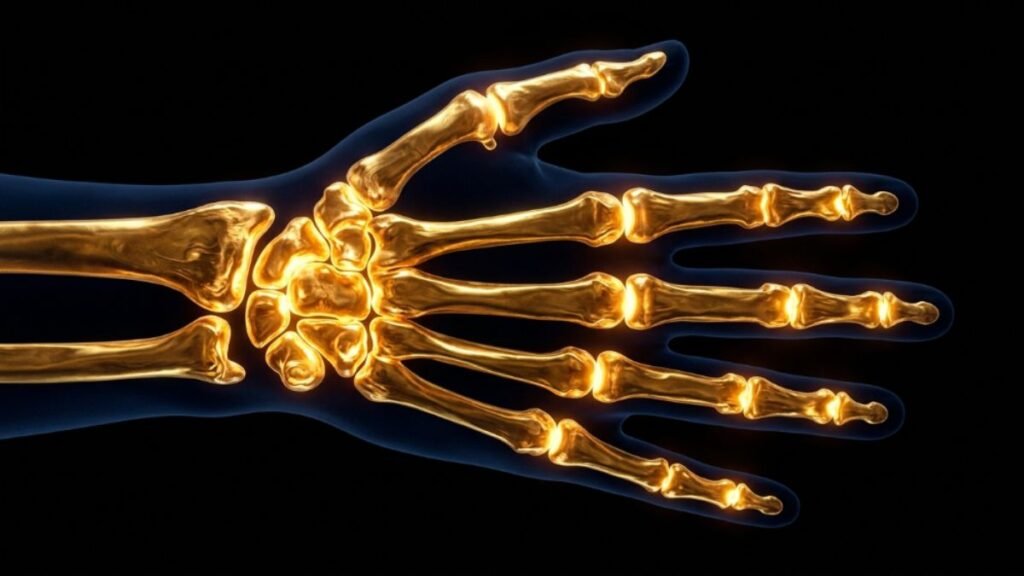
Understanding why joints begin to protest in midlife requires a brief look at what joints are actually made of — and what happens to those structures as the body ages.
A joint is where two bones meet. Healthy joints are cushioned by cartilage — a firm, rubbery tissue that absorbs shock and allows bones to glide smoothly against each other. Surrounding the joint is the synovial membrane, which produces synovial fluid: the joint’s natural lubricant. Ligaments, tendons, and muscles provide stability and control movement.
After 40, several of these systems begin to shift in ways that cumulatively increase discomfort.
Cartilage Breakdown Accelerates
Cartilage has no blood supply of its own. It relies on the compression and release of movement to absorb nutrients from synovial fluid — which means both too much and too little movement contribute to its degradation. After 40, the chondrocytes (cartilage-producing cells) slow their repair activity, and the balance between breakdown and regeneration tips unfavorably. The result is thinner, less resilient cartilage that provides less protection with each passing year.
Synovial Fluid Decreases
The quantity and quality of synovial fluid declines with age. Less fluid means more friction, slower nutrient delivery to cartilage, and a higher probability of inflammation after activity. This is why many adults over 40 notice that joints feel significantly better once they’ve been moving for a few minutes — the warmup period is the fluid redistribution process.
Inflammation Becomes Chronic
One of the most significant biological shifts after 40 is the emergence of what researchers call “inflammaging” — a state of low-grade, chronic, systemic inflammation that is closely associated with aging. This baseline inflammatory state accelerates joint tissue breakdown, sensitizes pain receptors, and makes recovery from physical stress slower. Elevated inflammatory markers such as C-reactive protein (CRP) and interleukin-6 (IL-6) are consistently found in adults with joint pain, and both are directly influenced by diet, sleep, stress, and body composition.
Hormonal Shifts Change Joint Sensitivity
For women, the decline in estrogen during perimenopause and menopause has a direct impact on joint health. Estrogen has anti-inflammatory properties and plays a role in maintaining connective tissue elasticity. As levels fall — typically beginning in the early 40s — joint inflammation tends to increase and ligament laxity can cause instability. This is why joint pain frequently intensifies or appears for the first time during the menopausal transition.
For men, declining testosterone after 40 is associated with reduced muscle mass and increased fat tissue — both of which affect joint loading and stability. Lower testosterone also correlates with higher systemic inflammation.
Practical Tip: Morning joint stiffness that improves within 30 minutes of movement is typically mechanical in origin. Stiffness that persists beyond 45–60 minutes, or that is accompanied by warmth, swelling, or redness, warrants evaluation by a healthcare professional — it may indicate an inflammatory arthritis condition.
The Most Common Types of Joint Pain After 40
Not all joint pain is the same, and the differences matter — both for understanding what is happening and for choosing the right interventions.
Osteoarthritis: The Most Prevalent Condition
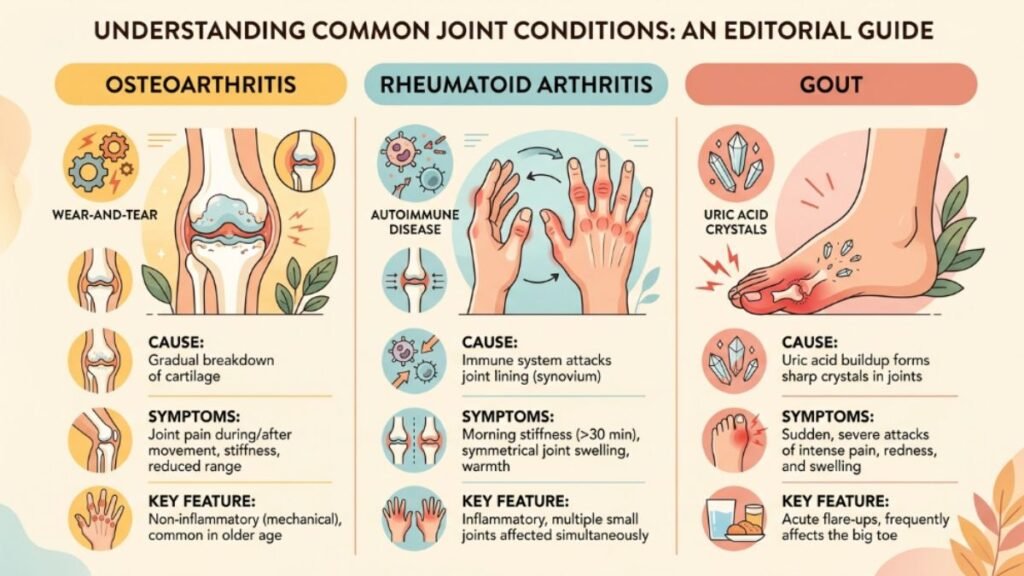
Osteoarthritis (OA) is the most common form of joint disease, affecting an estimated 32.5 million Americans. It is characterized by the progressive breakdown of cartilage, most frequently in the knees, hips, hands, and spine. OA is often described as a “wear and tear” disease, but that framing is increasingly considered an oversimplification.
Current research suggests OA is a whole-joint disease driven by inflammation, metabolic factors, and mechanical stress — not simply the result of years of use. This distinction matters because it opens the door to biological interventions that go beyond pain management.
Key characteristics of osteoarthritis:
- Pain that worsens with activity and improves with rest (in early stages)
- Joint stiffness in the morning that resolves within 30 minutes
- A grating, clicking, or popping sensation during movement
- Gradual progression over months or years
- Most common in weight-bearing joints (knees, hips) and the hands
Rheumatoid Arthritis: Autoimmune in Origin
Rheumatoid arthritis (RA) is an autoimmune condition in which the immune system mistakenly attacks the synovial lining of joints. Unlike OA, RA is systemic — it can affect multiple joints simultaneously and is frequently accompanied by fatigue, low-grade fever, and general malaise.
RA affects approximately 1.3 million Americans and is two to three times more common in women. It can begin at any age but frequently emerges between 40 and 60. The key distinguishing features from OA are:
- Symmetrical joint involvement (both wrists, both knees)
- Morning stiffness lasting more than one hour
- Small joints of the hands and feet are often affected first
- Elevated inflammatory markers in blood tests
RA requires medical diagnosis and disease-modifying medication — natural interventions play a valuable supporting role but cannot replace appropriate treatment.
Gout: A Metabolic Condition Affecting Joints
Gout occurs when uric acid crystals accumulate in joint spaces, triggering sudden, severe inflammatory attacks. It most commonly affects the big toe, but can involve the ankle, knee, and wrist. Gout is strongly associated with diet (high purine foods, alcohol, fructose), kidney function, and metabolic health — and its prevalence increases significantly after 40.
Bursitis and Tendinitis
These conditions involve inflammation of the bursae (fluid-filled sacs that cushion joints) and tendons respectively. They typically develop from repetitive motion or sudden increases in activity. Common in the shoulder, hip, elbow, and knee, they often resolve with targeted rest and physical therapy but can become chronic without proper management.
The Role of Inflammation in Joint Pain After 40
Inflammation is both the body’s most powerful healing tool and, when chronic, one of its most damaging processes. In the context of joint health, understanding inflammation is not optional — it is foundational.
Acute inflammation is appropriate and beneficial. When you injure a joint, inflammatory cytokines rush to the site, remove damaged tissue, and initiate repair. The problem arises when this process becomes chronic and systemic — when the inflammatory response is always partially active even in the absence of acute injury.
What Drives Chronic Joint Inflammation After 40?
Several factors are now well-established as drivers of systemic inflammation that specifically affects joints:
Visceral body fat functions as an active endocrine organ, releasing pro-inflammatory adipokines including leptin and resistin. Even a modest accumulation of abdominal fat is associated with meaningfully elevated inflammatory markers. This is one reason why weight management is consistently the most impactful joint intervention for overweight adults.
Gut microbiome imbalance (dysbiosis) has emerged in recent research as a significant contributor to systemic inflammation. The gut lining acts as a barrier between intestinal contents and the bloodstream — when that barrier is compromised, bacterial byproducts enter circulation and trigger systemic inflammatory responses. Several studies have found direct correlations between gut microbiome diversity and the severity of both OA and RA.
Chronic sleep deprivation elevates inflammatory cytokines including IL-6 and TNF-alpha. A single night of poor sleep measurably increases these markers — and the chronic sleep disruption common in adults over 40 creates a sustained inflammatory environment that accelerates joint tissue breakdown.
Blood sugar dysregulation promotes the formation of advanced glycation end-products (AGEs) — compounds that stiffen collagen, reduce cartilage elasticity, and trigger inflammatory cascades in joint tissue. Adults with insulin resistance or type 2 diabetes consistently show faster cartilage degradation than metabolically healthy peers.
Attention: If your joint pain is accompanied by unexplained fatigue, skin changes, eye inflammation, or affects multiple joints simultaneously, these may be signs of systemic inflammatory disease. Seek evaluation from a rheumatologist rather than managing these symptoms independently.
What Evidence-Based Nutrition Does for Joint Health
Diet is one of the most powerful — and most underutilized — tools for managing joint pain after 40. The research is consistent: what you eat directly influences systemic inflammation, cartilage metabolism, and joint tissue quality.
The Anti-Inflammatory Foundation
The Mediterranean dietary pattern has the strongest evidence base for reducing joint inflammation. Its core principles are straightforward:
- Emphasize: fatty fish (salmon, sardines, mackerel), olive oil, colorful vegetables, leafy greens, legumes, nuts, and seeds
- Moderate: lean poultry, whole grains, and dairy
- Minimize: red meat, processed foods, refined sugar, seed oils, and alcohol
The omega-3 fatty acids in fatty fish (EPA and DHA) are particularly well-studied for joint health. A 2020 meta-analysis in Rheumatology found that omega-3 supplementation significantly reduced joint pain intensity, morning stiffness, and the number of tender joints in patients with rheumatoid arthritis. The anti-inflammatory effects on OA are similarly documented.
Nutrients That Specifically Support Joint Tissue
| Nutrient | Role in Joint Health | Best Food Sources |
|---|---|---|
| Vitamin C | Essential for collagen synthesis; antioxidant protection | Bell peppers, citrus, kiwi, broccoli |
| Vitamin D | Regulates immune response; supports bone density | Fatty fish, egg yolks, fortified foods, sunlight |
| Magnesium | Reduces inflammatory markers; supports muscle function | Dark leafy greens, nuts, seeds, dark chocolate |
| Collagen peptides | Provides amino acids for cartilage repair | Bone broth, collagen supplements |
| Quercetin | Potent anti-inflammatory flavonoid | Onions, apples, capers, berries |
| Curcumin | Inhibits NF-kB inflammatory pathway | Turmeric (with black pepper for absorption) |
Foods That Worsen Joint Pain
Several commonly consumed foods have well-documented pro-inflammatory effects that directly worsen joint symptoms:
- Added sugar and refined carbohydrates spike blood glucose and promote AGE formation
- Trans fats and industrial seed oils (corn, soybean, canola in excess) increase arachidonic acid and inflammatory prostaglandins
- Alcohol elevates uric acid (relevant for gout) and increases gut permeability
- Processed meats contain advanced glycation end-products formed during high-heat processing
Practical Tip: A simple starting point is a two-week elimination of sugar-sweetened beverages and processed snack foods. Many adults with chronic joint inflammation report a noticeable reduction in pain and stiffness within 10–14 days of this single dietary change — before adding any supplements or structured exercise.

Movement and Exercise: The Right Approach After 40
One of the most counterproductive responses to joint pain is rest. While acute injury requires temporary unloading, chronic joint pain — particularly from osteoarthritis — consistently worsens with prolonged inactivity.
The research is unequivocal: movement is medicine for joints. Cartilage receives its nutrients through the compression and release cycle of movement. Muscles surrounding joints provide stability and reduce mechanical load on cartilage. And physical activity is one of the most effective anti-inflammatory interventions available.
The key is choosing the right type, intensity, and progression of movement.
Exercise Types and Their Joint Benefits
Low-impact aerobic exercise (swimming, cycling, walking, water aerobics) maintains cardiovascular health, supports weight management, and improves synovial fluid circulation without placing excessive stress on joints. These modalities are the foundation of any joint-protective fitness program after 40.
Strength training is perhaps the most valuable and underutilized tool for joint health. Well-developed muscles — particularly the quadriceps for knee health, the glutes for hip health, and the rotator cuff for shoulder health — absorb mechanical load that would otherwise be transferred to cartilage. A 2021 review in Osteoarthritis and Cartilage found that resistance training significantly reduced pain and improved function in knee OA, with effect sizes comparable to NSAIDs.
Mobility and flexibility work (yoga, stretching, tai chi) maintains joint range of motion, reduces muscle tension that pulls joints out of alignment, and has been shown in multiple studies to reduce pain perception and improve balance in adults with OA.
A Simple Framework for Joint-Protective Exercise
- Start with range of motion: 5–10 minutes of gentle, full-range movements each morning before loading the joint
- Build strength around the joint: 2–3 sessions per week targeting the muscles that protect your most affected joints
- Add low-impact cardio: 20–30 minutes of walking, cycling, or swimming on most days
- Progress slowly: a 10% weekly increase in volume is a widely cited safe progression rate
- Listen to the difference between discomfort and damage: mild muscle soreness is normal; sharp joint pain during or after exercise signals the need to modify
Best Practice: Water-based exercise is particularly valuable for adults with moderate to severe joint pain, as buoyancy reduces effective body weight by up to 90%, allowing full-range movement and cardiovascular conditioning without joint loading. Even one or two water sessions per week significantly reduces pain and stiffness in clinical studies.

Natural Supplements With Evidence for Joint Health
The supplement market for joint health is enormous and uneven — some products have meaningful research support, others rely primarily on marketing. Below is an honest assessment of the ingredients with the strongest evidence base.
Glucosamine and Chondroitin
Among the most widely studied joint supplements. Glucosamine is a natural compound involved in cartilage synthesis; chondroitin supports cartilage elasticity and inhibits the enzymes that degrade it. The GAIT trial — a large NIH-funded study — found that the combination of glucosamine and chondroitin provided significant pain relief for patients with moderate to severe knee OA. Results are more modest in mild cases.
Typical dose: 1,500 mg glucosamine + 1,200 mg chondroitin daily, with results typically emerging after 8–12 weeks.
Collagen Peptides
Hydrolyzed collagen provides the specific amino acids (glycine, proline, hydroxyproline) that cartilage uses for repair. A 2019 study in the British Journal of Nutrition found that collagen peptide supplementation improved joint pain and function in physically active adults. The evidence for OA patients is growing.
Typical dose: 10–15 g of hydrolyzed collagen daily, ideally taken with vitamin C to support collagen synthesis.
Omega-3 Fatty Acids (Fish Oil)
EPA and DHA inhibit the production of inflammatory leukotrienes and prostaglandins — the chemical mediators that drive joint inflammation. The evidence base for omega-3s in both OA and RA is robust and consistent.
Typical dose: 2–3 g of combined EPA+DHA daily. Look for molecularly distilled fish oil to ensure purity.
Curcumin (Turmeric Extract)
Curcumin inhibits NF-kB — one of the master regulators of the inflammatory response. Multiple randomized controlled trials have found curcumin to be as effective as ibuprofen for knee OA pain, without the gastrointestinal side effects. Bioavailability is poor without piperine (black pepper extract) or lipid-based delivery systems.
Typical dose: 500–1,000 mg of curcumin extract (standardized to 95% curcuminoids) twice daily with food and black pepper.
Boswellia Serrata
A resin from the Boswellia tree, long used in Ayurvedic medicine. Modern research has confirmed its ability to inhibit 5-LOX (5-lipoxygenase), an enzyme central to the production of leukotrienes that drive joint inflammation. Clinical trials show significant improvements in pain, stiffness, and walking distance in OA patients.
Typical dose: 100–250 mg of AKBA-standardized Boswellia extract daily.
| Supplement | Primary Mechanism | Evidence Level | Typical Onset |
|---|---|---|---|
| Glucosamine + Chondroitin | Cartilage synthesis and protection | Strong (moderate to severe OA) | 8–12 weeks |
| Omega-3 Fatty Acids | Reduces inflammatory cytokines | Strong (OA and RA) | 6–8 weeks |
| Curcumin | NF-kB inflammatory pathway inhibition | Strong | 4–8 weeks |
| Collagen Peptides | Cartilage amino acid supply | Moderate and growing | 8–12 weeks |
| Boswellia Serrata | 5-LOX pathway inhibition | Moderate | 4–6 weeks |
BEST JOINT SUPPLEMENT FOR ADULTS OVER 40: Joint Genesis Review

Lifestyle Factors That Accelerate or Slow Joint Decline
Beyond nutrition and exercise, several lifestyle factors have a direct and measurable impact on how quickly or slowly joint health declines after 40.
Body Weight and Joint Loading
Every pound of excess body weight places approximately four pounds of additional force on the knee joint during normal walking — a relationship well-established in biomechanics research. Losing just 10 pounds reduces the cumulative load on each knee by 40 pounds per step. For adults with knee OA, even modest weight loss produces clinically significant reductions in pain and improvements in function.
Sleep Quality
Deep, restorative sleep is when the body conducts the majority of its anti-inflammatory and tissue repair work. Chronic sleep deprivation elevates IL-6 and CRP, directly worsening joint inflammation. Adults who improve their sleep quality — through consistent sleep timing, blue light management, and sleep environment optimization — consistently report reduced joint pain as a secondary benefit.
Stress and Cortisol
Chronic psychological stress maintains elevated cortisol, which suppresses the immune system’s resolution of inflammation and accelerates cartilage breakdown. Mind-body practices including meditation, deep breathing, and yoga have evidence-backed anti-inflammatory effects — not through relaxation alone, but through measurable reductions in inflammatory biomarkers.
Posture and Ergonomics
Poor posture creates asymmetrical loading on joints over time. Prolonged sitting with hip flexors in shortened position, forward head posture from screen use, and flat-footed gait patterns all create chronic joint stress that compounds into pain over years. Working with a physical therapist or corrective exercise specialist to identify and address these patterns is one of the highest-return investments available to adults with chronic joint pain.
When to See a Doctor: Signs That Warrant Professional Evaluation
Natural interventions are powerful, but they have appropriate limits. Certain presentations of joint pain require prompt medical evaluation rather than self-management.
Seek professional evaluation if you experience:
- Joint swelling, warmth, or redness — particularly if sudden in onset
- Morning stiffness lasting more than one hour — a hallmark of inflammatory arthritis
- Fever accompanying joint pain — may indicate infection or systemic inflammatory disease
- Joint pain following trauma — to rule out fracture or ligament tear
- Rapidly worsening pain or function over days or weeks
- Pain in multiple joints simultaneously, especially if symmetrical
- Joint pain accompanied by fatigue, skin rashes, or eye inflammation
Primary care physicians can order basic inflammatory markers and imaging. If systemic inflammatory disease is suspected, referral to a rheumatologist is appropriate. For mechanical joint problems, an orthopedic specialist or sports medicine physician can assess structural integrity.
JOINT PAIN AFTER 40 TREATMENT OPTIONS: Joint Genesis Review
Building Your Daily Joint Health Protocol
The most effective approach to joint pain after 40 is not a single intervention — it is a coordinated daily strategy that addresses the multiple contributing factors simultaneously. Here is a practical framework:
Morning:
- 5–10 minutes of gentle range-of-motion exercises before loading affected joints
- Anti-inflammatory breakfast: fatty fish or eggs, leafy greens, berries, and olive oil
- Take collagen peptides with Vitamin C in morning beverage
Throughout the day:
- Move every 45–60 minutes if sedentary work is your norm — even a 2-minute walk meaningfully reduces inflammatory marker accumulation
- Stay well-hydrated — synovial fluid quality is directly affected by hydration status
- Take omega-3 and curcumin supplements with meals for better absorption
Exercise (4–5 days per week):
- 2–3 sessions of low-impact strength training
- 3–4 sessions of aerobic activity (walking, swimming, cycling)
- Daily mobility and stretching, even if brief
Evening:
- Reduce blue light exposure 1–2 hours before sleep to support overnight anti-inflammatory repair
- Consider magnesium glycinate before bed — supports both sleep quality and muscle relaxation
- Consistent sleep and wake times to regulate cortisol rhythm
Best Practice: Track your joint pain on a simple 1–10 scale each morning for 8 weeks as you implement these changes. The data helps you identify which interventions are working most meaningfully for your specific body — and provides motivation as the numbers trend downward.
Conclusion
Joint pain after 40 is real, it is common, and it deserves to be taken seriously — but it is not an inevitable sentence. The biology behind midlife joint changes is well understood, and the interventions with meaningful evidence behind them are accessible, practical, and largely within your control.
The most important takeaways from this guide:
- Joint pain in midlife is driven by a combination of inflammation, cartilage changes, hormonal shifts, and lifestyle factors — most of which are modifiable
- Chronic systemic inflammation is the central mechanism connecting diet, sleep, stress, body weight, and joint health — addressing it systemically produces broader benefits than targeting the joint alone
- Movement is not the enemy — the right kind of movement, progressed appropriately, is one of the most powerful therapies available for joint health after 40
- Supplements including omega-3s, curcumin, collagen peptides, and Boswellia have meaningful clinical evidence and work best as part of a broader lifestyle strategy
- Certain presentations of joint pain require medical evaluation — knowing when to seek professional guidance is part of taking your joint health seriously
Your joints are not just a structural problem to be managed. They are a reflection of your overall metabolic, inflammatory, and hormonal health — and improving them improves everything else. Start with one change this week: an anti-inflammatory meal, a morning mobility routine, or a consistent bedtime. Then build from there.
Frequently Asked Questions About Joint Pain After 40
Is joint pain after 40 always a sign of arthritis?
Not at all. While osteoarthritis is the most common cause of joint pain in midlife, many other conditions can produce similar symptoms: bursitis, tendinitis, gout, muscle tightness, poor posture, nutritional deficiencies, or hormonal changes. A proper diagnosis from a healthcare provider is the most reliable way to understand what is actually driving your joint pain — and to direct your interventions appropriately.
Can joint cartilage actually regenerate or repair itself?
Cartilage has limited regenerative capacity because it has no direct blood supply. However, current research shows that cartilage breakdown can be meaningfully slowed, and the conditions that support cartilage health — adequate nutrient delivery through movement, anti-inflammatory nutrition, and appropriate supplementation — can maintain existing cartilage for significantly longer than a sedentary, inflammatory lifestyle. Newer therapies including platelet-rich plasma (PRP) and stem cell injections show promise for stimulating cartilage repair, though the evidence base is still developing.
How long does it take for dietary and lifestyle changes to reduce joint pain?
Most people who implement consistent anti-inflammatory dietary changes report noticeable improvements in joint comfort within 2–4 weeks. Supplements typically require 6–12 weeks to produce measurable effects. Exercise interventions typically show benefit within 4–6 weeks when consistently applied. The cumulative effect of multiple simultaneous changes tends to produce faster results than any single intervention.
Is walking good or bad for arthritic joints?
Walking is generally beneficial for arthritic joints, with appropriate caveats. Regular walking maintains cartilage nutrition, supports muscle strength, reduces body weight, and improves mood — all of which directly benefit joint health. The key variables are surface (softer is better), footwear (supportive and shock-absorbing), duration (start shorter and build gradually), and terrain (flat before hills). Walking on very hard surfaces for long distances without adequate preparation can aggravate symptoms. Most clinical guidelines for OA specifically recommend regular walking as a core intervention.
Are anti-inflammatory medications a good long-term solution for joint pain?
NSAIDs (ibuprofen, naproxen) are effective for acute pain management and flare control, but long-term use carries meaningful risks: gastrointestinal bleeding, kidney stress, and emerging evidence of effects on cardiovascular health. They also address symptoms without addressing root causes. The clinical consensus is that NSAIDs are appropriate for short-term or intermittent use as part of a broader management strategy — but should not be the primary long-term approach for chronic joint pain.
Does cold or damp weather actually make joint pain worse?
Many people with OA report increased pain in cold or damp weather, and this is not purely psychological. Changes in barometric pressure affect the pressure inside joint spaces, which can sensitize pain receptors. Cold temperatures also reduce blood flow to peripheral tissues, increasing stiffness. While climate change is not a practical intervention, warming up more thoroughly before activity in cold weather, staying well-hydrated, and using heat therapy on stiff joints before movement can all mitigate weather-related joint symptoms.
What is the single most impactful change someone with joint pain after 40 can make?
The research most consistently points to body weight management for overweight adults — the mechanical load reduction and anti-inflammatory effect of losing even 10–15 pounds produces more measurable joint improvement than any single supplement or therapy. For normal-weight adults, the single most impactful change is typically adopting an anti-inflammatory dietary pattern, as this simultaneously addresses the systemic inflammation driving joint damage across multiple mechanisms.

Sarah Mitchell is a health and wellness writer specializing in longevity, natural supplementation, and healthy aging for adults over 40. With a background in nutrition sciences and years of research into evidence-based approaches to long-term well-being, she founded Sowing Healthy to provide honest, research-grounded guidance for people navigating the health changes that come with midlife. Sarah believes that good health is built gradually — through the right information, consistent habits, and supplements that actually earn their place.